Idioms are the colorful gems of any language. They’re phrases where the meaning isn’t literal, but metaphorical, cultural, or humorous.
Imagine telling a friend, “I’m feeling under the weather,” and they actually look for a thermometer—idioms can be tricky for learners but also exciting.
For adults, learning idioms is particularly useful. They make your speech sound natural, help you understand movies and books, and even give you an edge at work.
Picture this: Jane had a stressful week at the office. She tells her coworker, “I’m burning the candle at both ends,” and he instantly understands her exhaustion without needing a detailed explanation.
That’s the power of idioms—they communicate complex feelings in just a few words.
In this article, we’ll explore 17+ idioms that adults use in daily life, work, literature, and humor. You’ll see examples, mini-stories, dialogues, and exercises to make learning fun and practical.
Fun Fact / Trivia
Did you know? Some English idioms date back hundreds of years. For instance, “break the ice” comes from the old practice of ships breaking ice in frozen rivers to allow others to pass. Many idioms still carry their historical charm today!
Idioms Grouped by Emotion and Context
1. Mild Upset / Frustration
a) Spill the beans
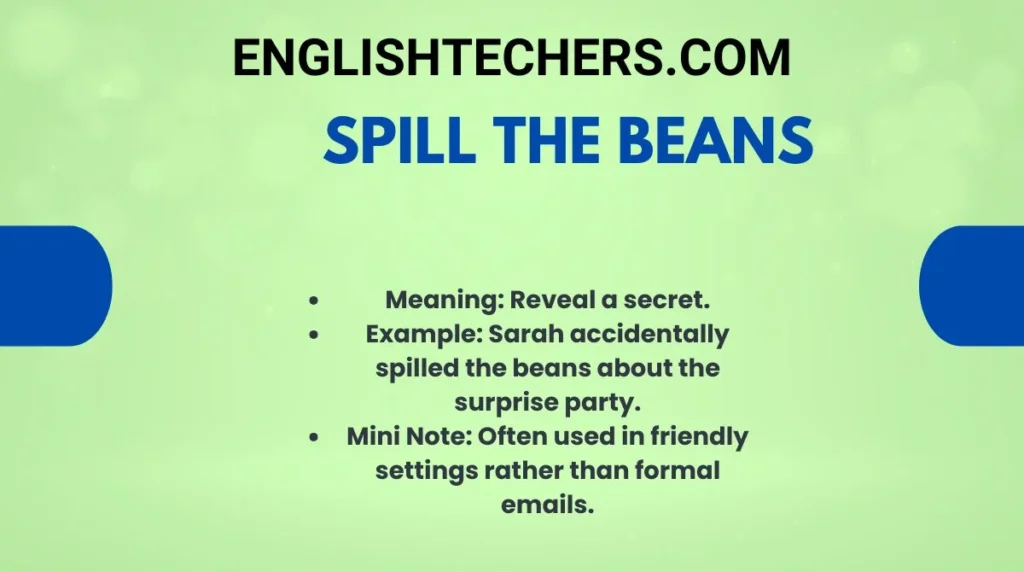
- Meaning: Reveal a secret.
- Example: Sarah accidentally spilled the beans about the surprise party.
- Mini Note: Often used in friendly settings rather than formal emails.
b) Hit a snag
- Dialogue:
Tom: “How’s the project going?”
Lisa: “We hit a snag with the software update. It’s slowing everything down.” - Tip: Use when a small problem disrupts plans.
2. Stress & Overwork
a) Burn the candle at both ends
- Story: Alex worked two jobs and still went to night classes. Eventually, he felt exhausted, truly burning the candle at both ends.
b) At the end of your rope
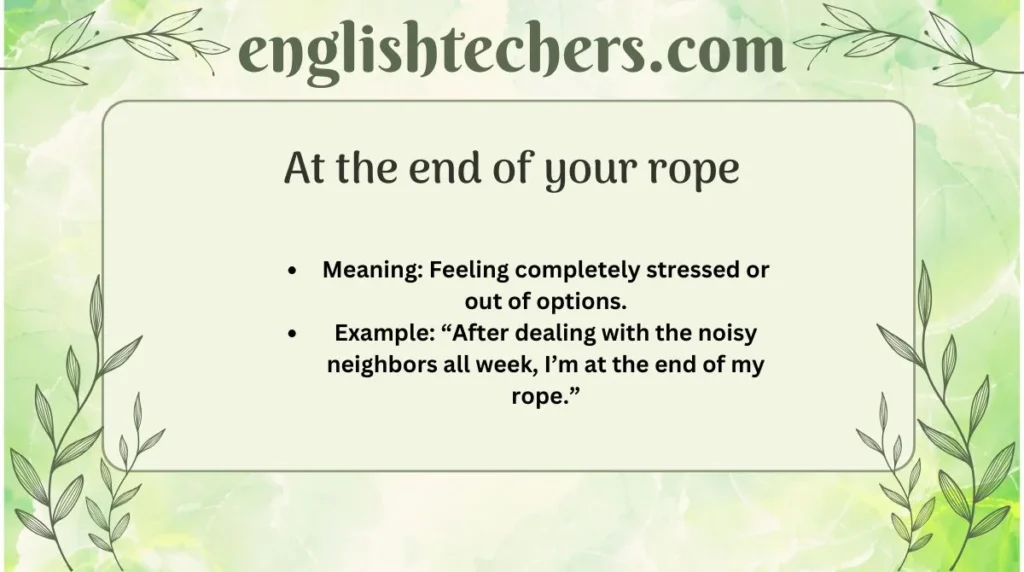
- Meaning: Feeling completely stressed or out of options.
- Example: “After dealing with the noisy neighbors all week, I’m at the end of my rope.”
Emotional Scale Table
| Idiom | Intensity | Context |
|---|---|---|
| Spill the beans | Mild | Daily life |
| Hit a snag | Mild | Work |
| Burn the candle at both ends | Moderate | Stress |
| At the end of your rope | Strong | Overwork / personal stress |
3. Heartbreak & Disappointment
a) Break someone’s heart
- Example: Emma’s rejection of Peter’s proposal broke his heart.
b) Cry over spilled milk
- Cultural Note: This idiom reminds us not to waste energy on past mistakes—common advice in both English-speaking families and workplaces.
c) Add insult to injury
- Mini Exercise: Complete the sentence:
“He missed the meeting and, to ___, forgot to send the report.”
4. Workplace / Professional Idioms
a) Think outside the box
- Usage: Encourages creative thinking in meetings.
- Dialogue:
Manager: “We need fresh ideas for the campaign.”
Employee: “Let’s think outside the box and explore social media challenges.”
b) Touch base
- Example: “I’ll touch base with the client tomorrow to confirm the schedule.”
c) Move the goalposts
- Warning / Mistake: Avoid overusing in formal reports; better for casual workplace conversations.
5. Humor / Creative Idioms
a) Kick the bucket
- Meaning: To die (humorous / informal).
- Example: “I hope my goldfish doesn’t kick the bucket this week.”
b) Let the cat out of the bag
- Micro-story: Lucy planned a surprise trip for Tom. Her brother accidentally let the cat out of the bag, and Tom knew before the big reveal!
c) Barking up the wrong tree
- Usage Tip: Perfect for light-hearted criticism: “If you think I’m the one who ate your cookies, you’re barking up the wrong tree!”
6. Idioms in Literature
Many idioms appear in famous books:
- “Break the ice” – Shakespeare’s plays
- “Wear your heart on your sleeve” – Shakespeare, Othello
- “Caught between a rock and a hard place” – Greek mythology origins
Cultural Note: Literature often preserves older idioms, giving learners exposure to historical and formal English.
7. Idioms Used by Native Speakers in Real Life
Native speakers frequently use idioms in casual conversations:
- “I’m on cloud nine” → super happy
- “Hit the sack” → go to sleep
- “Bite the bullet” → face something difficult
Mini Exercise: Try replacing the literal sentence with an idiom:
- Literal: “I’m very happy about the promotion.”
- Idiom: “I’m on ___ nine!”
8. How to Use Idioms in Daily Life
- Speaking: Use idioms to express emotions quickly. Example: “I was at the end of my rope today.”
- Writing: Add color to emails, essays, or personal letters—but avoid overloading professional documents.
- Professional Setting: Use idioms cautiously; familiar idioms like “think outside the box” work well.
Common Mistakes Learners Make:
- Using idioms literally: “I’m feeling under the weather” → standing in rain.
- Mixing idioms: “Cry over spilled beans” (wrong) instead of “Cry over spilled milk”.
- Overusing idioms → can sound unnatural.
9. Exercises / Practice Sentences
Fill in the blanks with an idiom from this article:
- After working 14 hours straight, I was truly ___________.
- Don’t worry about losing that small amount of money; it’s just ___________.
- Jane accidentally ___________ about the surprise party.
- To succeed in marketing, you need to ___________.
FAQ
1: Can idioms be used in formal writing?
Mostly avoid them, but some like “think outside the box” are acceptable in business emails.
2: Are idioms the same in British and American English?
Some differ. Example: “Bob’s your uncle” is British; Americans rarely use it.
3: How can I remember idioms easily?
Use them in micro-stories or dialogues, like the examples above.
4: Do idioms appear in IELTS exams?
Yes! Using a few idioms naturally can improve speaking scores.
5: Can idioms be translated literally?
No. Idioms are often culture-specific. Literal translations may confuse learners.
Conclusion
Idioms are like secret codes that make your English sound natural, witty, and culturally aware. From expressing frustration to adding humor, idioms help convey emotions quickly and memorably.
Start with a few idioms each week, practice in stories or conversations, and soon you’ll speak like a native. Remember: language is for living, so don’t be afraid to play with idioms—your English will shine brighter with each one you use! 🌟

Thomas Reed is an experienced English teacher helping students learn with simple, clear lessons.
He focuses on improving speaking, grammar, and confidence through easy daily practice.