Imagine this: You’ve just finished a long-term project at work, or your favorite TV show has finally aired its finale.
How do you express that moment when something comes to an end? In English, idioms—colorful, figurative phrases—are perfect for this. They not only make your language richer but also help you sound more like a native speaker.
Idioms for ending something are especially useful because they allow you to communicate emotions, whether it’s relief, sadness, frustration, or even humor.
For example, if your messy roommate finally moves out, you might say, “Well, that chapter is closed!”—conveying relief and finality in one phrase.
These idioms pop up in everyday conversations, literature, movies, and even professional emails. Knowing them can boost your confidence in speaking and writing, and add flair to your English.
In this article, we’ll explore 15+ idioms for ending something, grouped by emotion and context, complete with examples, mini-stories, and fun exercises.
Fun Fact / Trivia
Did you know that the idiom “close the book on something” has been used in English literature since the 1600s? Originally, it literally referred to finishing reading a book, but over time it evolved to mean finishing a chapter in life, a job, or a project.
English is full of idioms like this that transform everyday actions into figurative wisdom.
Idioms Grouped by Emotion
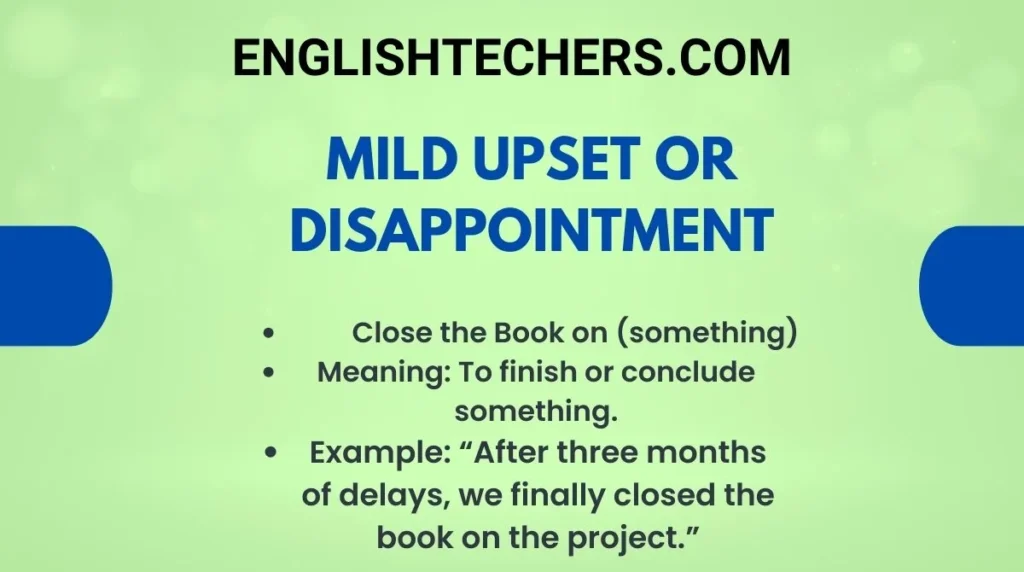
1. Mild Upset or Disappointment
1️⃣ Close the Book on (something)
- Meaning: To finish or conclude something.
- Example: “After three months of delays, we finally closed the book on the project.”
2️⃣ Call It a Day
- Meaning: Decide to stop working or doing an activity.
- Dialogue:
“I’m exhausted from all the editing.”
“Let’s call it a day and finish tomorrow.”
3️⃣ Draw the Line
- Meaning: Set a limit or stop tolerating something.
- Example: “I like helping you, but I have to draw the line at doing your homework.”
2. Stress / Tension Relief
4️⃣ Put to Rest
- Example: “The manager’s announcement put to rest all rumors about layoffs.”
5️⃣ Bite the Bullet
- Mini story:
John hated quitting sports, but his knee injury forced him to bite the bullet. He ended his football career gracefully.
6️⃣ Break It Off (romantic context)
- Example: “They decided to break it off after realizing they wanted different things.”
Cultural Note:
In American English, break it off is more casual, while end the relationship is more formal.
3. Frustration / Strong Emotions
7️⃣ Throw in the Towel
- Meaning: To give up, admit defeat.
- Example: “After three failed attempts, I had to throw in the towel.”
8️⃣ End on a High Note
- Meaning: Finish something positively.
- Dialogue:
“The conference had some hiccups, but the keynote speaker helped us end on a high note.”
9️⃣ Pull the Plug
- Meaning: Stop something abruptly.
- Example: “The investors pulled the plug on the startup after poor performance.”
4. Heartbroken / Emotional
10️⃣ Turn the Page
- Meaning: Move on from a difficult situation.
- Example: “After the breakup, she needed time to turn the page.”
11️⃣ End of the Line
- Example: “This was the end of the line for their partnership.”
12️⃣ Part Ways
- Dialogue / Mini story:
“It’s sad, but we need to part ways professionally. Our visions just don’t match.”
Usage Warning:
Avoid using part ways casually with friends—it feels formal or businesslike.
5. Humor / Creative Twists
13️⃣ Kick the Bucket (humorous, for ideas or projects)
- Example: “After years of trying, that old marketing strategy finally kicked the bucket.”
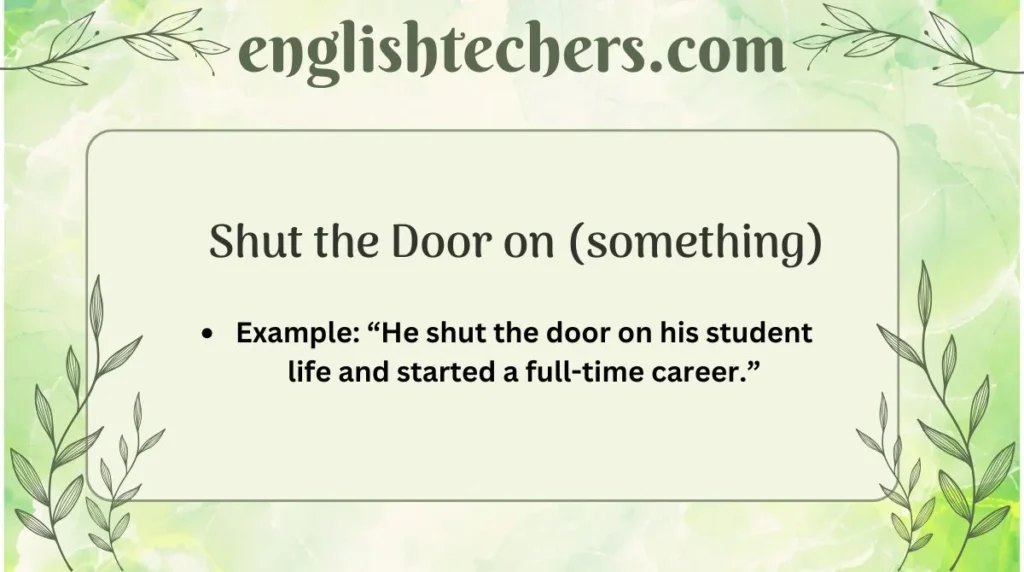
14️⃣ Shut the Door on (something)
- Example: “He shut the door on his student life and started a full-time career.”
15️⃣ Hit the Sack / Sack It Out (playful / daily context)
- Dialogue:
“I can’t handle this late-night work anymore.”
“Time to hit the sack and deal with it tomorrow!”
Table: Emotional Scale of Idioms
| Emotion Type | Idiom Examples | Intensity |
|---|---|---|
| Mild upset | Close the book, Call it a day | Low |
| Stress / tension | Put to rest, Bite the bullet | Medium |
| Frustration | Throw in the towel, Pull the plug | High |
| Heartbroken | Turn the page, End of the line | Medium-High |
| Humor / playful | Kick the bucket, Hit the sack | Low-Medium |
Idioms in Real Life & Literature
- Native Speakers:
Native speakers often use idioms casually: “Let’s call it a day” at work or “turn the page” when talking about life changes. - Literature:
Classic novels like Pride & Prejudice use idiomatic phrases like “close the book on their engagement” to convey resolution and closure elegantly. - Workplace / Professional:
Idioms like “put to rest” or “pull the plug” are common in corporate settings, especially in meetings or reports.
Exercises / Practice Sentences
Fill in the blanks:
- After months of arguing, they finally __________ on their differences.
- I think it’s time to __________ and go home; we’ve done enough.
- She decided to __________ on her old hobby and try something new.
Answers: 1) drew the line / turned the page, 2) call it a day, 3) close the book
Mini Challenge: Try replacing simple phrases like “stop” or “finish” in your writing with one idiom from this list.
How to Use Idioms in Daily Life
- Speaking: Use idioms in conversations to sound natural.
- Writing: Sprinkle idioms in emails or blogs to add flair.
- Professional: Stick to mild/neutral idioms like put to rest, close the book, or draw the line.
- Common Mistakes:
- Using idioms literally (He literally kicked the bucket for quitting work).
- Overusing idioms in formal writing.
- Confusing similar idioms (draw the line vs call it a day).
- Wrong tense usage (I will call it a day yesterday ❌).
- Mixing casual and formal contexts.
FAQ
Q1: Can I use these idioms in IELTS writing?
A: Yes, but choose formal ones like close the book or put to rest. Avoid slang like kick the bucket.
Q2: Are idioms the same in British and American English?
A: Mostly yes, but some phrases like call it a day are widely used in both, while others may differ slightly in tone.
Q3: Can I use idioms in emails?
A: Yes, in casual or semi-formal emails. Avoid humorous ones in formal business letters.
Q4: Do idioms always have a figurative meaning?
A: Usually, yes. For example, turn the page rarely refers to a literal page—it means moving on.
Q5: How can learners remember idioms better?
A: Use them in mini-stories, dialogues, and daily journaling. Repetition with context helps retention.
Conclusion
Idioms for ending something aren’t just words—they’re little stories, emotions, and cultural insights packed into a few phrases.
From mild disappointments to heartbreak, stress, or humor, knowing these idioms helps you communicate more naturally and vividly.
Try using them in daily conversations, writing, or even social media posts. The more you practice, the more you’ll sound like a native speaker.
So, close the book on boring phrases, call it a day on plain English, and turn the page toward colorful idiomatic expression! Start sprinkling these idioms today and watch your English come alive.

Thomas Reed is an experienced English teacher helping students learn with simple, clear lessons.
He focuses on improving speaking, grammar, and confidence through easy daily practice.