Ever been at a party or a casual hangout and wanted to sound more natural in English? Instead of saying “I had fun,” imagine saying, “I painted the town red!” Idioms like this don’t just spice up your conversations—they help you sound like a native speaker.
Idioms are phrases where the meaning isn’t always obvious from the individual words. For English learners, they’re golden tools: they add personality, humor, and emotion to your speech.
And when it comes to having fun, idioms capture feelings that plain words just can’t.
Picture this: last weekend, Emma went to a music festival. She texted her friend: “I let my hair down and danced all night!” Her friend immediately knew she had an amazing time—without Emma ever using the word “fun.” That’s the magic of idioms.
In this guide, we’ll explore 24+ idioms for having fun, grouped by emotion, context, and intensity. You’ll get real-life examples, mini cultural notes, exercises, and even tips to avoid common mistakes. Let’s dive in!
Fun Fact About Fun Idioms 🎈
Did you know the idiom “paint the town red” dates back to 1837 in England? A group of aristocrats went on a wild night out and literally smeared red paint on buildings! Today, it’s just a colorful way to say “go out and have fun.”
Idioms for Having Fun: Real-Life Usage
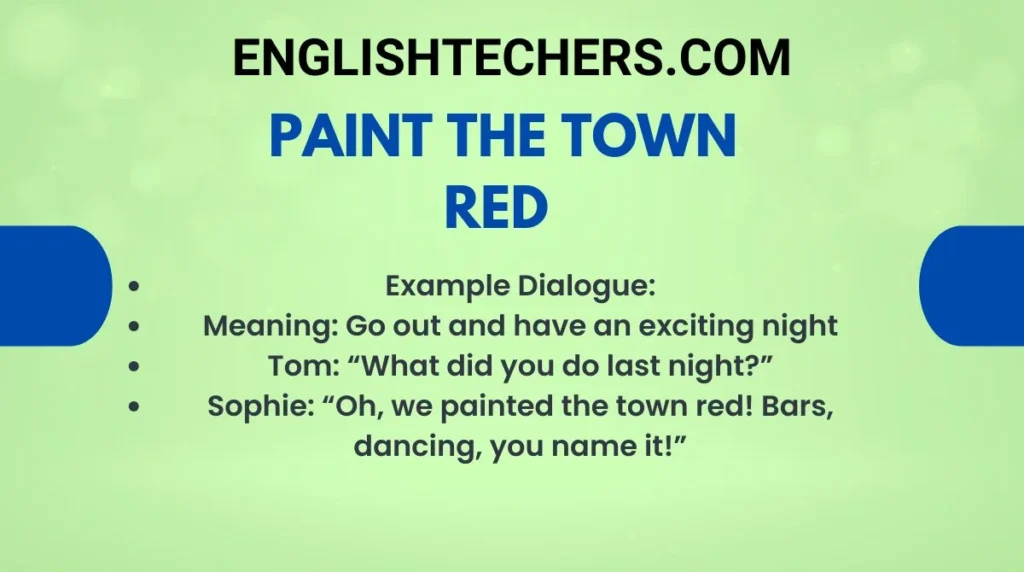
1. Paint the town red
- Example Dialogue:
- Meaning: Go out and have an exciting night
Tom: “What did you do last night?”
Sophie: “Oh, we painted the town red! Bars, dancing, you name it!”
2. Let your hair down
- Meaning: Relax and enjoy yourself freely
- Mini Story: During the office retreat, Mark finally let his hair down, singing karaoke like nobody was watching.
3. Kick up your heels
- Meaning: Have a lively, energetic time
- Example: At the wedding, everyone kicked up their heels until midnight.
4. Live it up
- Meaning: Enjoy life in an extravagant or carefree way
- Table: Daily Life vs Party Context
| Context | Idiom | Example |
|---|---|---|
| Party/Weekend | Paint the town red | “We painted the town red on Friday!” |
| Vacation/Travel | Live it up | “We’re in Bali – time to live it up!” |
5. Have a blast
- Meaning: Enjoy oneself immensely
- Usage Warning: Avoid literal translation—“blast” doesn’t mean an explosion here!
Fun Idioms by Intensity
| Mild Fun | Moderate Fun | Intense Fun |
|---|---|---|
| Have a ball | Kick up your heels | Paint the town red |
| Mess around | Let your hair down | Party like there’s no tomorrow |
| Fool around | Goof off | Live it up |
6. Goof off
- Meaning: Spend time doing fun but unproductive activities
- Example: On Saturday mornings, kids love to goof off instead of cleaning their rooms.
7. Fool around
- Meaning: Similar to goof off; can be playful or flirty
- Mini Cultural Note: In British English, it’s often innocent fun, while in American English it can imply mischief or flirting.
Idioms in Literature 📚
Many authors use fun idioms to create vivid imagery:
- “Paint the town red” appears in several 20th-century novels describing roaring parties.
- Shakespeare often used playful language like “trip the light fantastic”, which means to dance joyfully.
8. Trip the light fantastic
- Example: At the ball, the couple tripped the light fantastic for hours.
Professional / Workplace Fun Idioms 💼
Even at work, you can describe moments of joy without sounding childish:
9. Blow off steam
- Meaning: Release stress in a fun or relaxing way
- Example: After a tough project, the team went bowling to blow off steam.
10. Have a change of scenery
- Meaning: Take a break to refresh yourself
- Dialogue:
Manager: “Feeling burnt out?”
Employee: “Yes, I need a weekend trip to have a change of scenery.”
Funny or Creative Idioms 🤪
11. Paint a smile on your face
- Meaning: Force yourself to enjoy or appear happy
- Tip: Can be playful or sarcastic depending on tone.
12. Cut loose
- Meaning: Let go of restrictions and enjoy
- Example Dialogue:
Alice: “I’ve been so stressed lately.”
Bob: “Tonight, let’s cut loose!”
Exercises for Learners ✏️
Fill in the blanks using the correct idiom:
- After exams, we all went out to _______ and celebrate.
- On weekends, I love to _______ with friends in the park.
- At the office party, my boss finally _______ and danced with us!
Answers: 1. paint the town red, 2. fool around, 3. let his hair down
How to Use Idioms in Daily Life
- Speaking: Use in conversations to sound natural. E.g., “We kicked up our heels last night.”
- Writing: Add personality to emails, blogs, or storytelling.
- Professional: Use subtle idioms for casual chats with colleagues, like “blow off steam.”
Common Mistakes Learners Make 🚫
- Literal translation: “Kick up your heels” ≠ literally kicking your shoes.
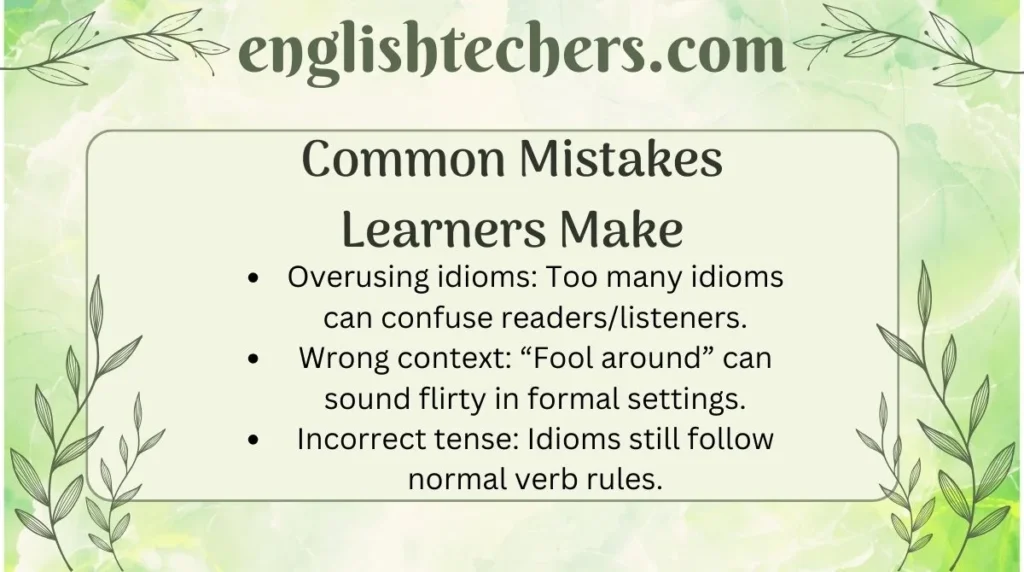
- Overusing idioms: Too many idioms can confuse readers/listeners.
- Wrong context: “Fool around” can sound flirty in formal settings.
- Incorrect tense: Idioms still follow normal verb rules.
FAQ
1. Are idioms universal?
No, idioms are culture-specific. “Paint the town red” may confuse non-native speakers.
2. Can idioms be used in formal writing?
Mostly no—reserve them for informal, narrative, or creative writing.
3. How can idioms help in IELTS speaking?
Using 2–3 relevant idioms naturally can boost your fluency score.
4. Do British and American English share idioms?
Many overlap, but some differ: “Fool around” in the UK is innocent, in the US can be flirty.
5. How to remember idioms?
Group them by context or intensity, and use them in short daily sentences.
Conclusion
Idioms are the secret sauce of English—they make your conversations colorful, relatable, and fun. From painting the town red to kicking up your heels, these 24+ idioms for having fun will help you sound like a native, whether chatting with friends, writing stories, or adding flair to professional interactions.
Practice them, mix them naturally, and soon your English won’t just be correct—it will be expressive, vivid, and memorable.
So next time someone asks, “Did you enjoy yourself?” impress them with an idiom instead of the plain “yes”!

Thomas Reed is an experienced English teacher helping students learn with simple, clear lessons.
He focuses on improving speaking, grammar, and confidence through easy daily practice.