
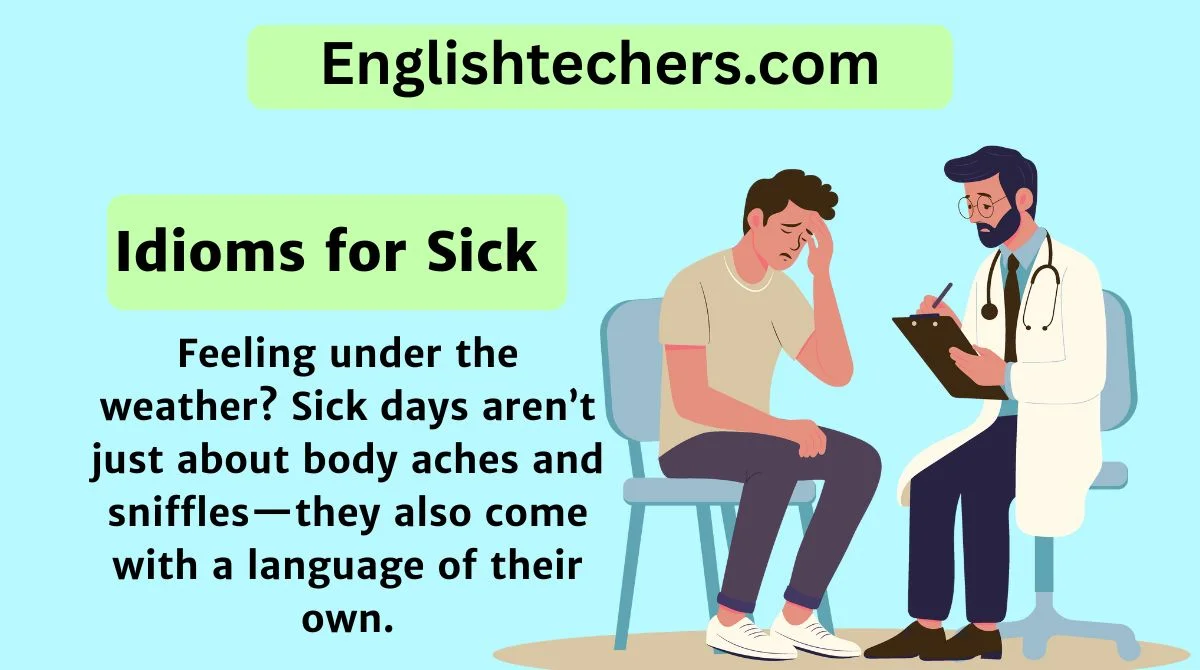
Feeling under the weather? Sick days aren’t just about body aches and sniffles—they also come with a language of their own.
English speakers often use idioms to describe being sick, tired, or just out of sorts. Idioms make your language sound natural, colorful, and emotionally expressive.
Instead of simply saying “I feel sick”, you can say “I’m feeling off my game” or “I’m under the weather”, giving your words personality.
Imagine this: Sarah woke up feeling dizzy, her head pounding like a drum. She texted her friend: “I’m feeling really under the weather today.”
Her friend instantly understood—no medical report needed. That’s the magic of idioms: one phrase can capture mood, intensity, and context all at once.
For learners of English, mastering these expressions is like unlocking a secret door into natural, native-like conversation.
Whether for daily life, literature, or workplace chatter, knowing 23+ idioms for sick can make you sound confident, relatable, and even humorous. Let’s dive in!
🌟 Fun Fact About “Sick” Idioms
Did you know? Many idioms for sickness date back centuries! “Under the weather” comes from old maritime language—sailors feeling seasick were literally sent below deck, away from harsh weather. Language evolves, but these vivid expressions remain a staple in everyday English.
🩺 Idioms for Mild Sickness or Feeling Unwell
| Idiom | Meaning | Example |
|---|---|---|
| Under the weather | Feeling sick or unwell | I’m feeling a bit under the weather, so I’ll skip the gym today. |
| Off-color / Off-colour | Slightly ill or not feeling your best | She’s a bit off-color after that long flight. |
| Peaky | Looking or feeling slightly ill | You look peaky—did you get enough sleep? |
| Feeling out of sorts | Mild discomfort or moodiness | I’ve been feeling out of sorts since Monday. |
Usage tip: “Off-color” is more common in British English, while “under the weather” is universal.
🤯 Idioms for Stress, Exhaustion, and Overwork
Sometimes being “sick” isn’t about germs—it’s about exhaustion.
Dialogue Example:
- Alex: “You look wiped out!”
- Jamie: “Yeah, I’m at death’s door after those 12-hour shifts.”
Idioms:
- At death’s door – extremely ill or exhausted
- Run down – worn out, often from overwork or lack of sleep
- Feeling washed out – drained of energy
- Out of commission – unable to function normally
Cultural Note: Workplace idioms like “run down” are common in casual conversations in English-speaking countries, often used humorously rather than literally.
💔 Idioms for Emotional or Heartfelt Sickness
Emotional upset can feel just like physical illness:
- Break one’s heart – emotionally painful, sometimes used metaphorically for stress-induced sickness
- Blue around the gills – looking sickly or unhappy
- Down in the dumps – feeling sad or ill at heart
- Under a cloud – feeling depressed or stressed
Mini Story:
Lily had a tough week. “I’m really down in the dumps,” she confessed. Her friend suggested a movie night to cheer her up. English idioms make feelings visible even without describing symptoms.
😂 Funny or Creative Idioms for Sick
Idioms can also add humor to your sickness stories:
- Green around the gills – literally or figuratively queasy
- Feeling peaky – looking pale and frail
- Sick as a dog – extremely ill
- Barking up the wrong tree – sometimes used humorously to exaggerate discomfort
Dialogue Example:
- Tom: “You look terrible!”
- Anna: “I’m sick as a dog after that spicy taco.”
Tip: These idioms are often used in informal conversations; using them in formal emails may sound too casual.
📚 Idioms in Literature
Authors often use sickness idioms to convey mood:
- “He was under the weather, a shadow of his former self.” – classic literary style
- “Blue around the gills, she staggered home.” – vividly paints a scene
Pro Tip for Learners: Reading novels or short stories exposes you to idioms in context, making it easier to remember and use them naturally.
💼 Idioms for Workplace/Professional Settings
Sometimes you can’t say “I’m sick” bluntly at work:
| Idiom | Use Case |
|---|---|
| Call in sick | Standard phrase for notifying absence |
| Out of sorts | Mild sickness, polite tone |
| Run down | Overworked, needing rest |
| Under the weather | Polite and versatile for emails or chats |
Example Email:
Hi team, I’m feeling a bit under the weather today and will work from home. Thanks for understanding.
Cultural Tip: Using idioms in professional emails is fine if it’s mild and polite—avoid overly dramatic ones like “at death’s door” unless joking with close colleagues.
🧠 Exercises for Learners
- Fill in the blanks with the correct idiom:
- I’m feeling ___ today; I think I’ll skip the party.
- After three nights without sleep, she was completely ___.
- Rewrite the sentence using an idiom:
- “I am very sick after eating that cake.” → I’m sick as a dog after that cake.
- Create a short dialogue between two friends using at least two idioms for sick.
📊 Emotional Scale Table for “Sick” Idioms
| Intensity | Idioms |
|---|---|
| Mild | under the weather, off-color, peaky |
| Moderate | run down, out of sorts, washed out |
| Severe | at death’s door, sick as a dog, green around the gills |
| Emotional/Stress | down in the dumps, under a cloud, blue around the gills |
This table helps learners choose idioms based on how strong their feelings are.
💡 How to Use Idioms in Daily Life
- Speaking: Casual chats with friends/family
- Writing: Emails, blogs, social media posts
- Professional: Polite expressions like “under the weather” or “out of sorts”
- Literature/Storytelling: To describe physical or emotional states vividly
⚠️ Common Mistakes Learners Make
- Literal translation: “I am under the weather” ≠ “I am standing in rain.”
- Overusing extreme idioms: Saying “I’m at death’s door” for mild cold can sound dramatic.
- Mixing contexts: Using funny idioms in formal settings
- Pronunciation errors: “Peaky” and “picky” sound similar—context matters
- Confusing colors: “Off-color” (ill) ≠ “colorful”
FAQ
1: Can I use these idioms in formal writing?
Mostly mild ones like under the weather are fine. Avoid slang or humorous extremes.
2: Are these idioms understood globally?
Most are familiar to native speakers; some, like off-color, are more British.
3: Can idioms replace medical descriptions?
No, idioms express feelings, not medical diagnosis. Use them conversationally.
4: How do idioms help in IELTS or language tests?
Using idioms naturally can boost your speaking/writing scores, showing range and fluency.
5: Are these idioms gender-specific?
No, they are neutral. Both individuals and individuals use them interchangeably.
Conclusion
Idioms for sick aren’t just words—they’re little windows into feelings, moods, and culture. From mild discomfort to full-blown exhaustion, mastering these 23+ idioms will make your English more natural, expressive, and fun.
Next time you feel under the weather, don’t just say “I’m sick”—pick an idiom, tell a short story, or even joke about it. Your conversations will feel alive, colorful, and memorable.
So start using them today, and watch your English bloom!

Thomas Reed is an experienced English teacher helping students learn with simple, clear lessons.
He focuses on improving speaking, grammar, and confidence through easy daily practice.