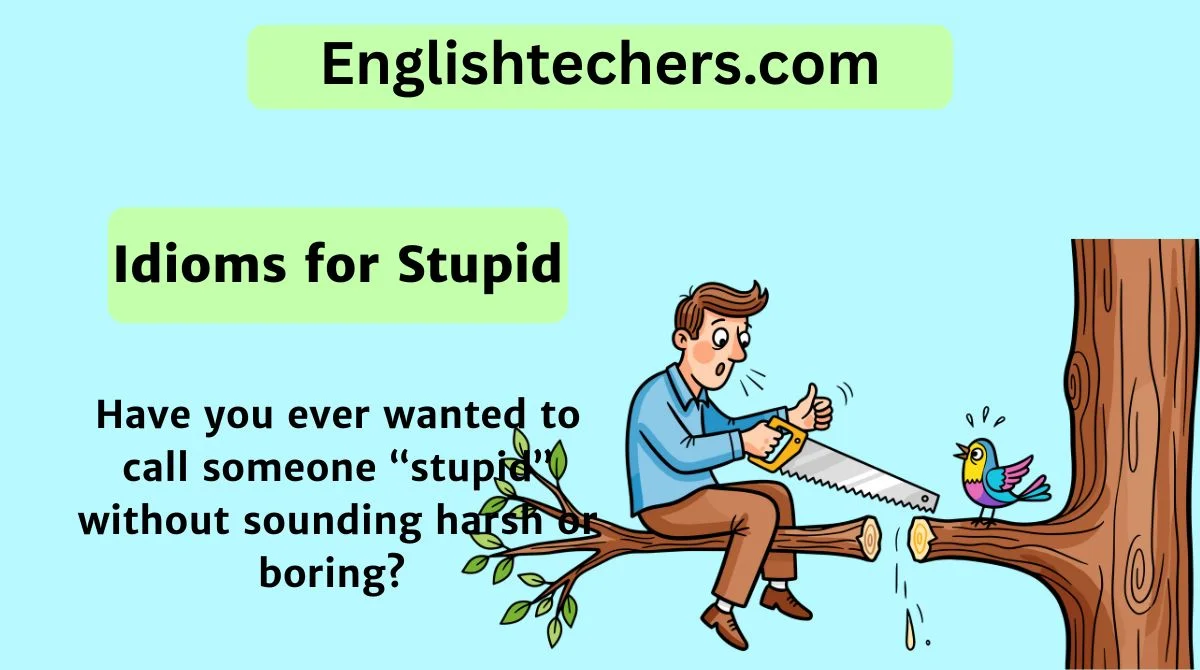
Have you ever wanted to call someone “stupid” without sounding harsh or boring? 🤔 That’s where idioms come to the rescue! Idioms are colorful expressions that native speakers use daily to express feelings in a lively, often humorous way.
Learning idioms for “stupid” can make your English sound more natural, witty, and emotionally nuanced.
Imagine this: You’re at a café, and your friend forgets their wallet—for the third time this week! You could say, “You’re so stupid,” but it sounds harsh. Instead, using an idiom like “not the sharpest tool in the shed” instantly adds humor while keeping it casual.
Idioms don’t just label someone—they add personality, tone, and even emotion to your speech. For English learners, mastering them is like unlocking a secret door into native-level conversation.
🎉 Fun Fact: Idioms About Stupidity
Did you know that many idioms about being “stupid” date back hundreds of years? For example, the phrase “dumb as a post” first appeared in the 1500s! Idioms often reflect cultural humor—like how English speakers enjoy poking fun at absent-mindedness or silliness in daily life.
1️⃣ Idioms by Intensity and Context
Let’s explore 21+ idioms for “stupid”, grouped by context and emotion so you can pick the right one for every situation.
Mildly Silly / Everyday Life
| Idiom | Example | Notes |
|---|---|---|
| Not the sharpest tool in the shed | “Jake forgot his keys again—he’s not the sharpest tool in the shed.” | Gentle humor, polite for friends |
| A few sandwiches short of a picnic | “She brought two spoons to eat soup—definitely a few sandwiches short of a picnic.” | Lighthearted, informal |
| A brick short of a load | “I think he’s a brick short of a load if he really believes that story.” | Casual, humorous |
Dialogue Example:
- Anna: “Did Tom try to fix the printer with a hammer?”
- Ben: “Yep, a brick short of a load, for sure!”
Frustrating / Annoying Stupidity
| Idiom | Example |
|---|---|
| Airhead | “I can’t rely on Mike for instructions—he’s such an airhead.” |
| Birdbrain | “She left the keys in the fridge again. Total birdbrain moment.” |
| Scatterbrain | “Sorry, I forgot our meeting! I’m a total scatterbrain today.” |
Mini Cultural Note:
Many of these idioms (like airhead or birdbrain) have playful roots in animals. In English, comparing someone to a bird or fluffy object often implies light, forgetful thinking.
Strong / Harsh Stupidity
| Idiom | Example |
|---|---|
| Dumb as a post | “He tried to open a locked door with a credit card—dumb as a post.” |
| Thick as two short planks | “Honestly, I can’t explain this twice; he’s thick as two short planks.” |
| As sharp as a marble | “She thought the test was optional—sharp as a marble!” |
Usage Warning:
These idioms are more insulting. Use them with friends jokingly, not in formal settings.
Funny / Creative Idioms
- Head in the clouds → “He’s always daydreaming in meetings—head in the clouds.”
- A few fries short of a Happy Meal → “Wow, that idea was a few fries short of a Happy Meal!”
- Lost the plot → “He completely lost the plot when trying to explain taxes.”
Short Micro-Story Example:
Lucy told her boss she forgot the report because her cat sat on the keyboard. Her coworkers whispered, “She’s a few fries short of a Happy Meal.” Everyone laughed, but the idiom perfectly captured her silly excuse.
🏢 Idioms in Professional / Workplace Settings
Not all idioms are appropriate for office conversations. Here are subtle, polite alternatives:
- Not the sharpest tool in the shed → Gentle way to describe a forgetful coworker.
- Out to lunch → “John’s out to lunch in today’s meeting.” (Means distracted or not paying attention)
- Missed the boat → “She missed the boat on that project deadline.” (Softer way to highlight oversight)
Tip: Avoid dumb as a post or thick as two planks in formal emails—they can offend.
📚 Idioms in Literature
English literature is packed with colorful idioms about foolishness. Shakespeare often mocked stupidity with expressions like:
- “The fool doth think he is wise, but the wise man knows himself to be a fool.”
- Charles Dickens also sprinkled idioms like “scatterbrained” to describe quirky, forgetful characters.
Using literary idioms can help learners recognize subtle humor in novels, plays, and essays.
🤹 Fun Exercises for Learners
Fill in the blanks:
- He tried to fix the computer with a wrench instead of a screwdriver. He’s __________.
- I forgot my homework again—I’m such a __________ today.
- She thought the movie started at 5 but it started at 3. She completely __________.
Answer Key:
- Dumb as a post
- Scatterbrain
- Lost the plot
Mini Challenge: Try creating your own short story using 3 idioms from this article!
🌈 Emotional Scale Table (Mild → Intense)
| Intensity | Idiom Example |
|---|---|
| Mild | Airhead, Head in the clouds |
| Moderate | Not the sharpest tool, A few sandwiches short of a picnic |
| Strong | Dumb as a post, Thick as two short planks |
| Hilarious / Sarcastic | A few fries short of a Happy Meal, Lost the plot |
This table helps learners choose idioms depending on tone—from light teasing to sarcastic humor.
💡 How to Use Idioms in Daily Life
- Speaking: Use idioms when joking with friends or describing quirky situations.
- Writing: Add flavor to emails (informal) or creative stories.
- Professional: Stick to subtle ones like not the sharpest tool or out to lunch to avoid offense.
- Learning Tip: Try replacing the word “stupid” in your sentences with an idiom—it’s a fun practice!
⚠️ Common Mistakes Learners Make
- Using idioms literally → “He is not the sharpest tool in the shed” doesn’t mean he’s carrying tools.
- Overusing harsh idioms → Avoid offending others with dumb as a post.
- Ignoring context → Some idioms are fine among friends but not in workplaces.
- Mixing similar idioms incorrectly → “A few sandwiches short” ≠ “Lost the plot”—meanings differ.
- Incorrect grammar → Idioms are fixed phrases, don’t change the words randomly.
FAQ
Can I use these idioms in formal writing?
Mostly no. Stick to mild idioms like “not the sharpest tool in the shed” for polite descriptions.
Are these idioms understood worldwide?
Idioms often reflect culture. Some may confuse non-native speakers, e.g., “a few fries short of a Happy Meal” is very US-specific.
Can idioms replace “stupid” in IELTS speaking?
Yes! Using idioms naturally can impress examiners, but don’t force them. Use appropriate context.
What’s the difference between British and American idioms?
British idioms often use words like planks or silly; American ones may use fries or Happy Meal. Tone and humor differ slightly.
How can I practice these idioms daily?
Write mini dialogues, label funny situations, or even watch sitcoms. Repeat idioms aloud to make them natural.
Conclusion
Idioms are the spice of English language—they make your speech lively, fun, and natural. Whether you’re teasing a friend, writing creatively, or understanding literature, idioms for “stupid” give you subtle ways to express humor and frustration.
Start small: pick a few idioms from this article, practice them in conversations, and watch your English sound more native and playful.
Remember, language is meant to be enjoyed—so sprinkle these idioms into your speech and have fun! 🌟

Thomas Reed is an experienced English teacher helping students learn with simple, clear lessons.
He focuses on improving speaking, grammar, and confidence through easy daily practice.