
Support is something we all need, whether it’s a friend lending a shoulder, a coworker helping with a tough project, or encouragement when life feels heavy.
English idioms about support help learners express care, encouragement, and teamwork naturally. Idioms add color to speech and writing, making communication more emotional and memorable.
Imagine this: Sarah had been struggling with her new job. Her colleague, Mark, always said, “I’ve got your back.” Those three words didn’t just mean help—they gave Sarah courage and trust.
Idioms like this help learners not just translate words but feel emotions, connect with people, and sound like a native speaker.
In this guide, you’ll explore 21+ idioms for support, grouped by context and emotional intensity. You’ll learn their meaning, see them in everyday dialogues, explore fun cultural notes, and even get exercises to practice like a pro.
🎲 Fun Fact About Support Idioms
Did you know the idiom “lend a hand” dates back to the 1600s? People used it literally for helping someone physically.
Today, it’s more metaphorical—offering help in any situation. English idioms often carry centuries of history, giving them a rich, cultural flavor.
🟢 Daily Life Support Idioms
1. Lend a hand
- Meaning: Offer help or assistance.
- Example:
“Can you lend a hand with moving these boxes?” - Usage tip: Casual and friendly; safe in most settings.
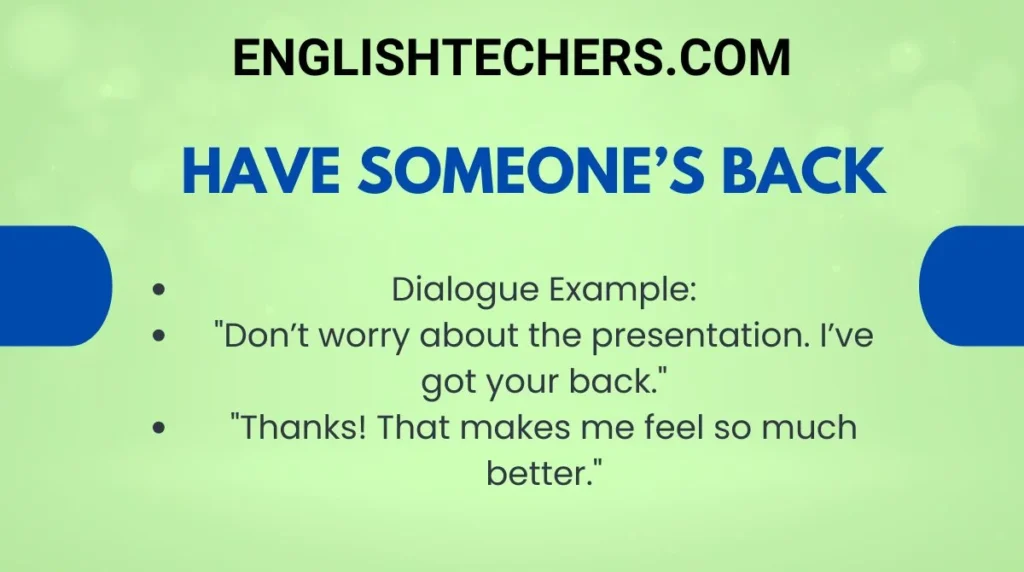
2. Have someone’s back
- Meaning: Offer protection or support in difficult situations.
- Dialogue Example:
“Don’t worry about the presentation. I’ve got your back.”
“Thanks! That makes me feel so much better.”
3. Stick together
- Meaning: Support each other, especially in challenging times.
- Mini Story:
Two friends faced the storm during a hiking trip. Rain poured, tents collapsed, but they stuck together—and eventually reached the summit. - Note: Often used for friendships, teams, or family bonds.
4. Shoulder the burden
- Meaning: Take on responsibilities or help someone with their problems.
- Example:
“She shouldered the burden of organizing the charity event alone.”
🟡 Emotional Support Idioms (Comfort & Encouragement)
| Idiom | Intensity | Example |
|---|---|---|
| Pick someone up | Mild | “A coffee with friends really picked me up.” |
| Cheer someone up | Mild | “I sent her a funny video to cheer her up.” |
| Lift someone’s spirits | Moderate | “His kind words lifted my spirits after the exam.” |
| Be a shoulder to cry on | Intense | “I needed a shoulder to cry on after losing my pet.” |
Cultural Note: Western culture often emphasizes emotional sharing. Idioms like “shoulder to cry on” are widely understood and can express empathy naturally.
🟠 Workplace & Professional Support Idioms
5. Cover someone’s back
- Meaning: Protect or help a colleague, often behind the scenes.
- Dialogue Example:
“I can cover your back in the meeting if the manager asks tough questions.”
“Appreciate it, that gives me confidence.”
6. Pull your weight
- Meaning: Contribute your fair share of effort.
- Usage Warning: Avoid misunderstanding—it’s about fairness, not personal insult.
“Everyone needs to pull their weight in this project.”
7. Go the extra mile
- Meaning: Do more than expected to support or impress.
“She really went the extra mile to ensure the client was happy.”
8. Back someone up
- Meaning: Support someone’s ideas or decisions.
“I’ll back you up during the pitch; your plan makes sense.”
🔵 Funny & Creative Support Idioms
9. Bail someone out
- Meaning: Help someone out of trouble.
- Dialogue Example:
“I forgot my wallet!”
“Don’t worry, I’ll bail you out.” - Fun Twist: Originally about literally paying bail for a prisoner—now metaphorical.
10. Hold someone’s hand
- Meaning: Guide or help someone carefully.
“The teacher held our hand through the difficult assignment.” - Mini Cultural Note: Often used figuratively in professional or learning contexts.
11. Pick up the slack
- Meaning: Take over someone else’s responsibilities.
“After Tom was sick, we had to pick up the slack in the team.”
🟣 Heartfelt & Emotional Support Idioms
12. Stand by someone
- Meaning: Remain loyal and supportive, especially in hard times.
“Through thick and thin, she always stood by me.”
13. Lend an ear
- Meaning: Listen to someone’s problems or worries.
“He just needed someone to lend an ear after the breakup.”
14. Be there for someone
- Meaning: Offer emotional or practical support.
“No matter what happens, I’ll be there for you.”

15. Take someone under your wing
- Meaning: Mentor or guide someone inexperienced.
“The senior engineer took me under his wing during my first project.”
🔴 Support Idioms in Literature
English literature is full of idioms about support. For example:
- Shakespeare: “Bear the burden bravely.”
- Jane Austen: Characters often stand by each other, showing loyalty in both friendship and romance.
Tip: Using literary idioms adds sophistication to writing while keeping it relatable.
🟤 Idioms for Stress & Frustration
| Idiom | Context | Example |
|---|---|---|
| Take the weight off someone’s shoulders | Stress relief | “Let me handle the report and take the weight off your shoulders.” |
| Help someone weather the storm | Crisis | “Her guidance helped me weather the storm at work.” |
| Have someone’s back in a pinch | Urgent support | “He had my back in a pinch during the debate.” |
✨ How to Use Idioms in Daily Life
- Speaking: Add idioms naturally in conversation.
- Example: “Don’t worry—I’ve got your back on this one.”
- Writing: Use idioms to convey emotion and relatability in emails or stories.
- Professional: Workplace idioms like “go the extra mile” or “cover someone’s back” are safe and effective.
Tip: Match the idiom to the situation’s intensity—don’t overuse in formal writing.
⚠️ Common Mistakes Learners Make
- Translating idioms literally—can cause confusion.
- Using casual idioms in formal writing (“bail someone out” in a report).
- Misunderstanding subtle differences (“stand by someone” = emotional, “back someone up” = professional).
- Mixing idioms—don’t say “lend a shoulder to cry on”; choose one idiom correctly.
- Overusing idioms in one paragraph—balance with plain English.
✍️ Practice Exercises for Learners
- Fill in the blank: “During the exam, my friend _______ my back when I forgot my notes.”
- Rewrite in your words: “She took me under her wing when I joined the team.”
- Dialogue creation: Write a 2-line conversation using “cheer someone up”.
🟢 Emotional Scale Table (Support Intensity)
| Intensity | Idioms |
|---|---|
| Mild | Cheer someone up, pick someone up, lend a hand |
| Moderate | Lift someone’s spirits, back someone up, go the extra mile |
| Strong | Be a shoulder to cry on, stand by someone, shoulder the burden |
FAQ
1. Can I use these idioms in formal writing?
Some are fine (go the extra mile), but avoid casual ones (bail someone out) in formal essays or reports.
2. Are these idioms universal across English-speaking countries?
Most are understood in US/UK, but minor variations exist. “Bail someone out” is common in the US but less so in the UK.
3. Can idioms be literal?
Yes! “Lend a hand” can be literal (helping someone move furniture) or figurative (offering help generally).
4. How to remember idioms effectively?
Create dialogues or mini-stories using them in your own life.
5. Are there idioms for online or digital support?
Yes! Phrases like “cover someone’s back” or “pick up the slack” are often used in team chats.
Conclusion
Idioms for support aren’t just colorful language—they are tools to connect, empathize, and inspire. From casual chats to workplace guidance, these idioms help you sound natural, caring, and confident.
Start using one idiom a day, mix them in conversation, and watch your English feel more alive. Remember: support isn’t just words—it’s action, feeling, and connection.
So next time a friend, colleague, or family member needs encouragement, speak with heart—and idiomically! 💬💖

Thomas Reed is an experienced English teacher helping students learn with simple, clear lessons.
He focuses on improving speaking, grammar, and confidence through easy daily practice.