Have you ever wanted to say “thank you” in a way that feels lively, personal, or even a little playful? English is full of idioms that do just that.
Idioms are expressions whose meanings aren’t always obvious from the words themselves. For example, if someone says, “You saved my bacon!”, they’re not talking about food—they’re thanking you for helping them out of trouble.
Idioms for saying “thank you” can make your English sound more natural and warm. Imagine your friend helps you move into a new apartment.
Instead of just saying “Thanks!”, you could say, “You’re a lifesaver!”—and it instantly feels heartfelt. Using idioms also helps you understand movies, songs, and books, where native speakers sprinkle these phrases naturally.
In this article, we’ll explore 17+ idioms for thank you, their meanings, contexts, and even some fun ways to practice them.
Fun Fact / Trivia
Did you know? The phrase “much obliged” dates back to the 17th century! Back then, it was a formal way of saying “I am indebted to you”. Today, it’s still used in polite, old-fashioned, or Southern U.S. English.
Idioms for Everyday Gratitude
1. Thanks a million / Thanks a ton
A casual, enthusiastic way to show appreciation.
Example:
“Thanks a million for helping me with my homework!”
Dialogue:
- Alex: “I grabbed your package from the post office.”
- Jamie: “Thanks a ton! You really saved me a trip.”
2. You’re a lifesaver
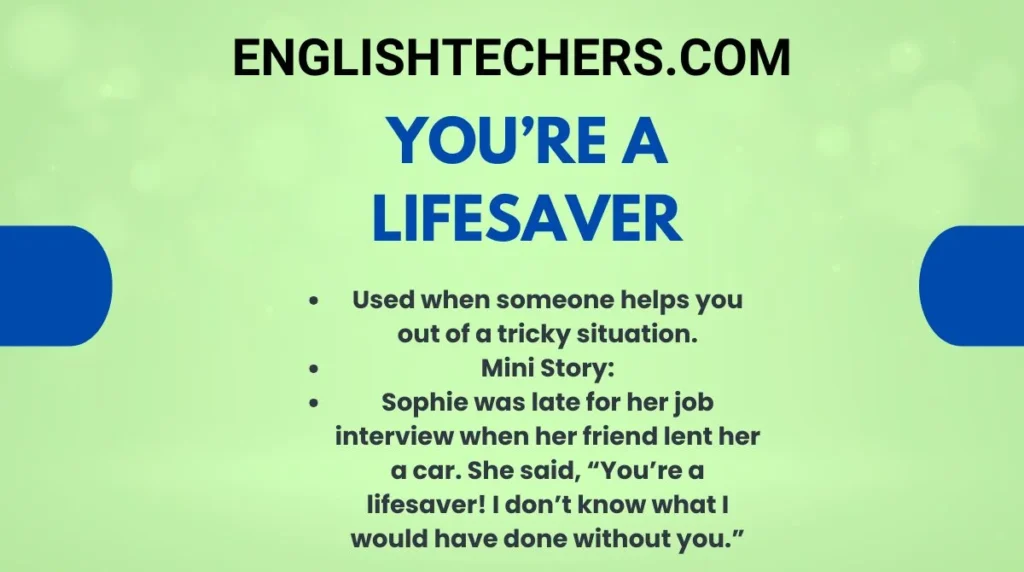
Used when someone helps you out of a tricky situation.
Mini Story:
Sophie was late for her job interview when her friend lent her a car. She said, “You’re a lifesaver! I don’t know what I would have done without you.”
Note: Very common in spoken English.
3. I owe you one
Indicates a debt of gratitude; you intend to return the favor.
Example:
“Thanks for covering my shift—I owe you one.”
Usage Tip: Often used informally among friends or colleagues.
4. Much obliged
Polite and slightly formal, often used in professional or Southern U.S. contexts.
Example:
“Much obliged for your assistance with the report.”
Mini Cultural Note: Common in literature or older films; sounds charming in modern writing if used sparingly.
5. You made my day
Expresses deep gratitude for something that lifted your spirits.
Example:
“Wow, you remembered my birthday! You really made my day.”
Dialogue:
- Emma: “I baked you cookies.”
- Liam: “You made my day! Thank you so much.”
Table of Idioms by Emotion / Intensity
| Idiom | Context / Intensity | Example |
|---|---|---|
| Thanks a million | Mild, everyday | “Thanks a million for the lift!” |
| You’re a lifesaver | Moderate, urgent help | “Thanks! You’re a lifesaver!” |
| I owe you one | Friendly / informal | “I owe you one for last night.” |
| Much obliged | Formal / polite | “Much obliged for your guidance.” |
| You made my day | Emotional / heartfelt | “You made my day with that surprise gift!” |
| Can’t thank you enough | Intense, deep gratitude | “I can’t thank you enough for saving me.” |
| Thanks heaps | Casual, enthusiastic | “Thanks heaps for your support!” |
Idioms for Professional / Workplace Gratitude
6. I really appreciate it
Polite and professional.
Example:
“I really appreciate your feedback on my presentation.”
Mini Exercise: Rewrite: “Thanks for your advice.” → “I really appreciate it.”
7. You’ve been very helpful
Formal and respectful, often in emails or reports.
Example:
“Your guidance through the project was invaluable—you’ve been very helpful.”
8. Thanks for going the extra mile
Acknowledges extra effort beyond expectations.
Dialogue:
- Manager: “The client loved the proposal you drafted.”
- Employee: “Thanks! I just wanted to make sure it was perfect.”
- Manager: “Well, you went the extra mile.”
9. Thanks for having my back
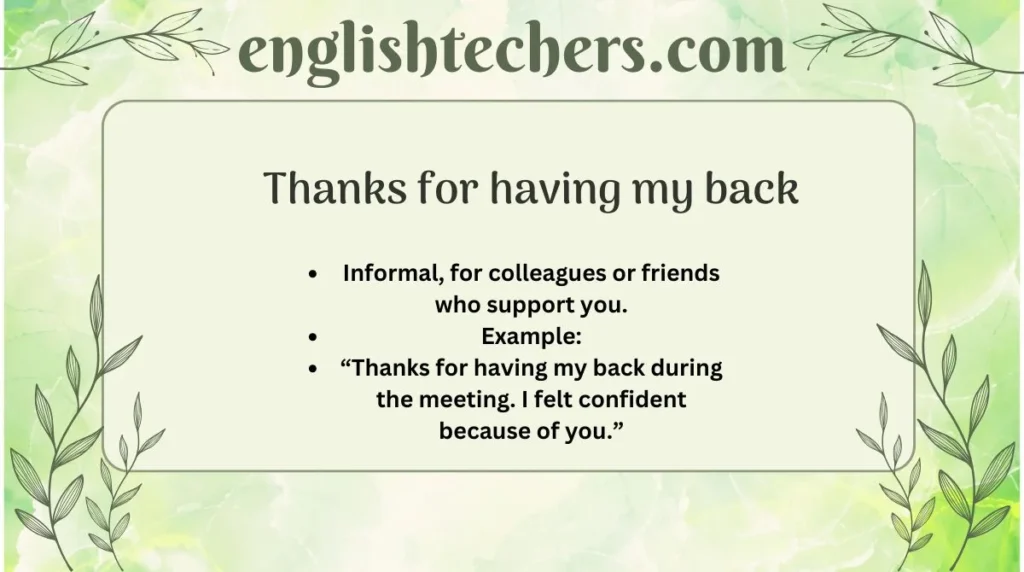
Informal, for colleagues or friends who support you.
Example:
“Thanks for having my back during the meeting. I felt confident because of you.”
Funny / Creative Gratitude Idioms
10. You saved my bacon
Playful, often used when someone rescues you from trouble.
Example:
“You lent me your notes—saved my bacon!”
Mini Story:
Tom forgot his wallet at lunch. His friend paid for his meal. “You saved my bacon, buddy!”
11. Thanks a bunch / Thanks a bushel
Casual and humorous ways to say thanks.
Dialogue:
- Anna: “I cleaned your desk while you were away.”
- Mark: “Thanks a bunch! That’s so kind of you.”
12. Much obliged, partner
Friendly, playful, and slightly Western-style (think cowboy movies).
Example:
“Much obliged, partner, for lending me your tools.”
Idioms in Literature
Many writers use idioms for a natural, flowing dialogue. For instance, in Pride and Prejudice, characters use expressions like “much obliged” to convey politeness.
Modern novels or teen fiction may prefer “You’re a lifesaver” or “You made my day” for warmth and relatability.
Idioms Used by Native Speakers in Real Life
- “I owe you one” – frequent among friends.
- “Can’t thank you enough” – common in heartfelt moments.
- “Thanks for having my back” – popular in workplaces or sports teams.
Tip: Listen carefully to TV shows, YouTube videos, or podcasts to catch these idioms in action.
Exercises for Learners
Fill in the blanks with the correct idiom:
- Wow, you remembered my birthday! You really __________.
- Thanks for helping me fix my laptop—you __________.
- I covered your shift yesterday, so now you __________.
- Much __________ for your guidance with the project.
Answers:
- made my day
- saved my bacon
- owe me one
- obliged
How to Use Idioms in Daily Life
- Speaking: Add idioms to conversations for warmth or humor.
- Writing: Use them in emails, thank-you notes, or creative writing—but avoid overusing.
- Professional settings: Stick to formal idioms like “I really appreciate it” or “Much obliged.”
Common Mistakes Learners Make
- Translating literally: “You saved my bacon” ≠ literally saving food.
- Overusing idioms in formal writing.
- Mixing intensity levels: saying “Can’t thank you enough” for minor favors.
- Misplacing idioms: “Thanks for having my back” is casual, not formal.
- Using outdated idioms without context: “Much obliged” may sound odd in casual conversation today.
FAQ
1: Are these idioms universal in English-speaking countries?
Mostly yes, but some idioms (like much obliged) are more common in the U.S. South or the UK.
2: Can I use idioms in formal writing?
Only formal ones like I really appreciate it or Much obliged. Casual idioms should stay in speech or friendly emails.
3: How do idioms help with IELTS or English exams?
Using idioms correctly can boost your speaking and writing scores—just avoid overstuffing sentences.
4: Can idioms for thank you be humorous?
Absolutely! Idioms like You saved my bacon or Thanks a bushel are playful and fun.
5: How can I remember idioms easily?
Create short dialogues or mini-stories using them. Repetition in real-life contexts works best.
Conclusion
Idioms for saying “thank you” add warmth, humor, and style to your English. From casual expressions like “Thanks a ton” to heartfelt ones like “You made my day”, using idioms helps you connect with native speakers and understand real-life conversations.
Practice a few each week, sprinkle them in your conversations, and watch your English sound more natural and expressive. Remember, gratitude is universal—express it creatively with idioms and make every “thank you” memorable!

Thomas Reed is an experienced English teacher helping students learn with simple, clear lessons.
He focuses on improving speaking, grammar, and confidence through easy daily practice.