
Imagine walking along a golden beach, waves gently lapping at your feet, the sun warming your skin, and a soft breeze carrying the scent of salt and sand.
Suddenly, your friend says, “Don’t get your feet wet just yet!” You laugh—but wait, is it literal, or is there an idiom hidden there? Welcome to the world of idioms—those colorful expressions that bring language to life.
Idioms are phrases whose meanings aren’t obvious from the individual words. They’re like secret codes of language.
Beach idioms, in particular, are perfect for painting mental pictures, adding humor, or expressing feelings with style. Whether you’re chatting with friends, writing a story, or preparing for IELTS, knowing beach-related idioms will make your English sparkle like sunlight on waves.
Let’s dive into over 20 idioms inspired by the sand, surf, and sunshine, each explained in a fun, learner-friendly way. By the end, you’ll not only understand them—you’ll want to use them daily.
Fun Fact / Trivia 🌊
Did you know that many beach idioms originate from sailors and coastal communities? Phrases like “smooth sailing” or “high tide” reflect centuries of maritime life and adventures on the sea.
So, when you use these idioms, you’re speaking the language of explorers, adventurers, and poets!
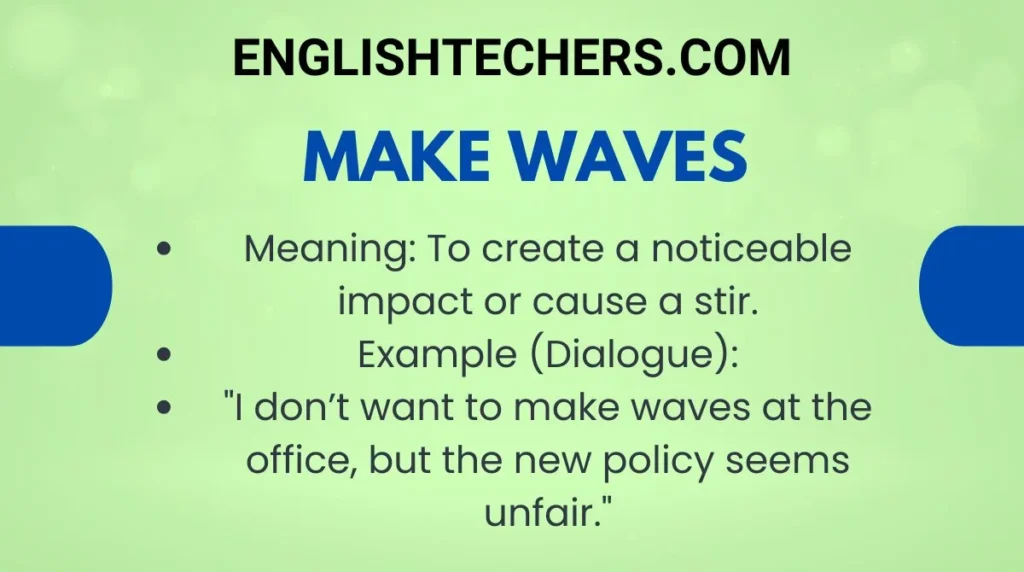
1. Make Waves
- Meaning: To create a noticeable impact or cause a stir.
- Example (Dialogue):
“I don’t want to make waves at the office, but the new policy seems unfair.” - Tip: Often used in professional or social contexts, not about actual water.
2. All at Sea
- Meaning: Confused, lost, or unsure what to do.
- Mini Story:
Lucy arrived at the beach festival with no map. “I’m all at sea!” she cried, realizing she had no idea where to start.
3. Smooth Sailing
- Meaning: Easy, without problems.
- Usage:
When planning a beach party, “It was smooth sailing once we found the perfect spot.” - Pro Tip: Great for workplace contexts too.
4. High Tide
- Meaning: Peak, critical point, or a busy time.
- Table: Emotional Context
| Idiom | Intensity | Example |
|---|---|---|
| High tide | Moderate | “During the high tide of summer, the beach is packed.” |
| Rising tide | Low | “A rising tide of excitement spread among the kids.” |
5. Catch the Wave
- Meaning: Take advantage of an opportunity.
- Cultural Note: Often surf slang—surfing culture heavily influenced modern idioms.
- Example: “We should catch the wave and launch our campaign now.”
6. Beach Bum
- Meaning: Someone who loves lounging at the beach.
- Micro-Dialogue:
“Are you coming to work today?”
“Nah, I’m a total beach bum this week!”
7. Sink or Swim
- Meaning: To fail or succeed on your own.
- Example: “In her first solo project, it was sink or swim.”
- Tip: Can be literal at sea, metaphorical in life.
8. Test the Waters
- Meaning: Try something new carefully.
- Exercise: Fill in the blank:
“Before committing to the beach clean-up project, I wanted to _________.” → Test the waters
9. Sand Between Your Toes
- Meaning: Feeling relaxed and happy at the beach.
- Mini Story: Maria sighed, “Nothing beats the sand between your toes after a stressful week.”
10. Go Overboard
- Meaning: Do too much.
- Warning: Can imply exaggeration or excess.
- Example: “He went overboard with decorations for the beach party.”
11. Make a Splash
- Meaning: Attract attention.
- Dialogue:
“I want my first art exhibition to make a splash.” - Tip: Works in business, art, or social situations.
12. Wave Goodbye
- Meaning: To leave or say farewell.
- Story: As the ferry departed, everyone waved goodbye to the island.
- Cultural Tip: Commonly used in friendly, casual contexts.
13. Take it Easy / Chill Out
- Meaning: Relax.
- Example: After a long hike, Tom said, “Let’s take it easy and enjoy the sunset on the beach.”
14. On the Rocks
- Meaning: In trouble, often for relationships or plans.
- Example: “Their business deal is on the rocks due to miscommunication.”
- Mini Cultural Note: Nautical origin—ships stranded on rocks.
15. Ride the Wave
- Meaning: Enjoy a trend or positive moment.
- Example: “Let’s ride the wave of popularity and expand the campaign.”
16. Sandy Toes, Sun-Kissed Nose
- Meaning: A poetic way to describe happiness at the beach.
- Usage Tip: Mostly casual, social media-friendly.
17. Low Tide / Down in the Dumps
- Meaning: Feeling sad or lacking energy.
- Exercise: Rewrite the sentence: “I felt ______ after missing my beach trip.” → low tide
18. Castaway
- Meaning: Feeling isolated or alone.
- Story: Stuck in a small town without friends, Jake felt like a castaway.
19. Drift Along / Go with the Flow
- Meaning: Relax and let things happen naturally.
- Dialogue:
“Why stress about your vacation plan?”
“You’re right, let’s just drift along.”
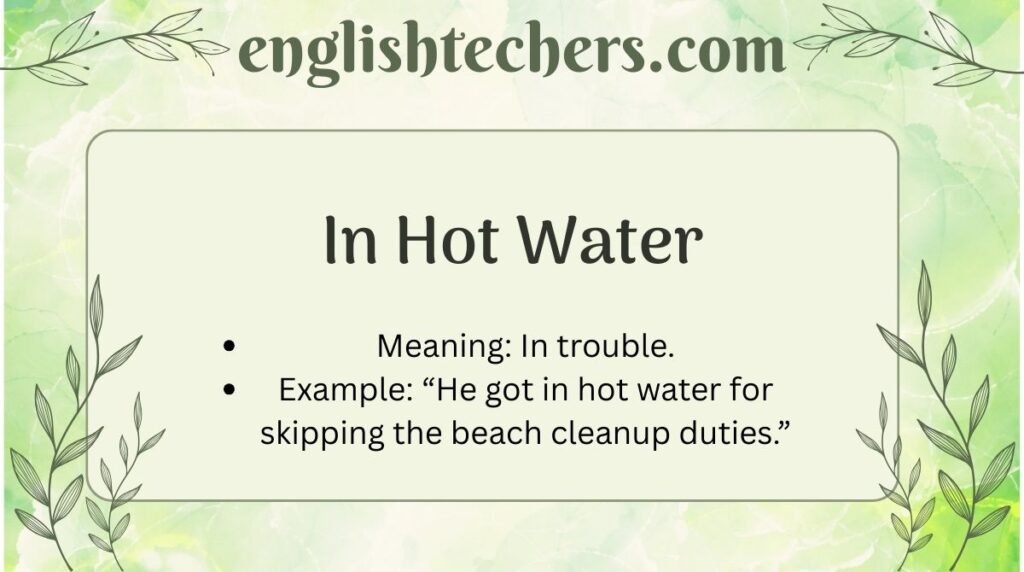
20. In Hot Water
- Meaning: In trouble.
- Example: “He got in hot water for skipping the beach cleanup duties.”
Idioms in Literature & Popular Culture 🌟
Many authors use beach idioms to create imagery. For example, Hemingway often described characters “all at sea” during existential moments, while modern beach novels use “sandy toes, sun-kissed nose” to evoke joyful vacation scenes.
Idioms in Professional / Workplace Settings 💼
- Smooth sailing: Describing a project without problems.
- Make waves: Suggesting someone’s new idea might disrupt the norm.
- Test the waters: Trying a new business strategy.
Funny or Creative Twists 😂
- “Crabby but sandy” → someone irritated yet beach-loving.
- “Sea-cret agent” → playful pun for a beach spy story.
- “Shell yeah!” → casual enthusiasm at the beach.
Emotional Scale Table: Beach Idioms
| Emotion | Mild | Moderate | Intense |
|---|---|---|---|
| Confusion | Test the waters | All at sea | Sink or swim |
| Happiness | Drift along | Sand between toes | Sandy toes, sun-kissed nose |
| Trouble/Stress | Low tide | On the rocks | In hot water |
| Opportunity | Catch the wave | Ride the wave | Make waves |
How to Use Beach Idioms in Daily Life 🏝️
- Speaking: Sprinkle them in casual conversations: “Let’s catch the wave and start this weekend adventure.”
- Writing: Use them in essays, emails, or social media posts to add color.
- Professional: “Smooth sailing” works in presentations or team discussions.
Common Mistakes Learners Make ⚠️
- Literal translation: “Make waves” literally = don’t talk about water.
- Wrong context: “All at sea” is emotional confusion, not a literal boat.
- Overuse: Using too many idioms in one sentence can confuse readers.
- Mixing idioms: “Ride the waves” is different from “sink or swim.”
- Ignoring formality: Some idioms are informal, avoid in academic writing.
Practice Exercise ✍️
Fill in the blanks with a suitable beach idiom:
- After the storm, the town was _______.
- Let’s _______ and see if the new app idea works.
- I was ______ when I couldn’t find my luggage on the beach.
- The CEO wants this marketing strategy to _______.
- Nothing beats the feeling of ______ after a long week.
Mini
1: Can beach idioms be used in formal writing?
Some, like smooth sailing, can be semi-formal; others like shell yeah! are strictly informal.
2: Are these idioms common in American and British English?
Yes! Though phrases like beach bum are more American, most are widely understood.
3: Can idioms have multiple meanings?
Absolutely! On the rocks can refer to relationships, plans, or literal rocks.
4: How to remember idioms effectively?
Use them in context, create small dialogues, or visualize the beach scene.
5: Are these idioms helpful for IELTS or language exams?
Yes, they demonstrate natural language use, especially in speaking and writing.
Conclusion
Beach idioms are more than fun expressions—they’re bridges between words and feelings, imagination and reality.
From smooth sailing in the office to sand between your toes on a weekend getaway, these idioms help you sound like a native while painting vivid mental pictures.
So, next time you chat, write, or share stories about the sea, sprinkle in some idioms, ride the wave of natural English, and make your language unforgettable.
Don’t just read—use them, play with them, and let your English shine like a sunlit beach!

Thomas Reed is an experienced English teacher helping students learn with simple, clear lessons.
He focuses on improving speaking, grammar, and confidence through easy daily practice.