

Imagine this: You’re at a café with a friend, and she whispers, “Honestly, I think your new haircut is… interesting.” You laugh nervously, wondering if she’s sugar-coating the truth.
Idioms about truth can help you express honesty, feelings, and reactions more naturally in English—without sounding blunt or robotic.
Idioms are phrases whose meaning isn’t literal but culturally understood. They add color, emotion, and authenticity to your speech and writing.
Using idioms for truth helps learners sound more like a native speaker and understand nuances in conversations, movies, books, and even workplace emails.
Whether it’s confessing a mistake, reacting to shocking news, or gently telling someone what you really think, there’s an idiom for every situation.
In this article, we’ll explore 19+ idioms for truth, grouped by context and emotion. You’ll also get tips on how to use them naturally, avoid mistakes, and even practice them in daily life. Let’s dive in!
Fun Fact: Truth in Idioms Around the World 🌍
Many English idioms about truth reflect honesty, secrecy, or reality. Interestingly, other languages do the same. For example, in French, “dire la vérité” means “to tell the truth,” but the slang equivalent is avouer le pot aux roses (“to reveal the pot of roses”), similar to “spill the beans” in English.
19+ Idioms for Truth
1. Spill the Beans
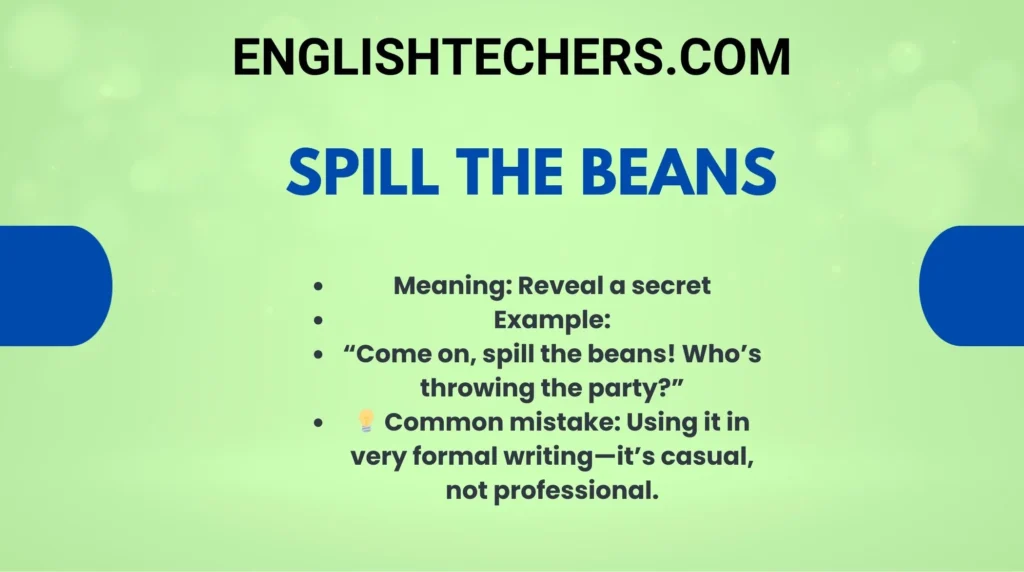
Meaning: Reveal a secret
Example:
“Come on, spill the beans! Who’s throwing the party?”
💡 Common mistake: Using it in very formal writing—it’s casual, not professional.
2. The Naked Truth
Meaning: Complete honesty, without hiding anything
Dialogue Example:
- Alice: “Do you like my painting?”
- Bob: “I’ll give you the naked truth—I think it needs brighter colors.”
3. Face the Music
Meaning: Accept the consequences of your actions
Example Story:
Tom forgot his homework. When the teacher asked for it, he had to face the music—and admit he’d left it at home.
4. Tell It Like It Is
Meaning: Speak honestly, without sugar-coating
Usage: Great for expressing your opinion in discussions or giving feedback.
5. Bite the Bullet
Meaning: Deal with a difficult truth or situation
Mini Cultural Note: Originates from soldiers literally biting bullets to endure pain.
6. Lay One’s Cards on the Table
Meaning: Be open about your intentions or feelings
Table: Emotional Intensity of Truth Idioms
| Idiom | Intensity | Context |
|---|---|---|
| Spill the Beans | Mild | Casual, fun |
| The Naked Truth | Moderate | Serious conversations |
| Face the Music | High | Mistakes, consequences |
| Bite the Bullet | High | Difficult truths |
| Lay One’s Cards on the Table | Moderate | Relationships, work |
7. Bring to Light
Meaning: Reveal something previously hidden
Example: “The investigation brought to light some shocking facts about the company.”
8. Call a Spade a Spade
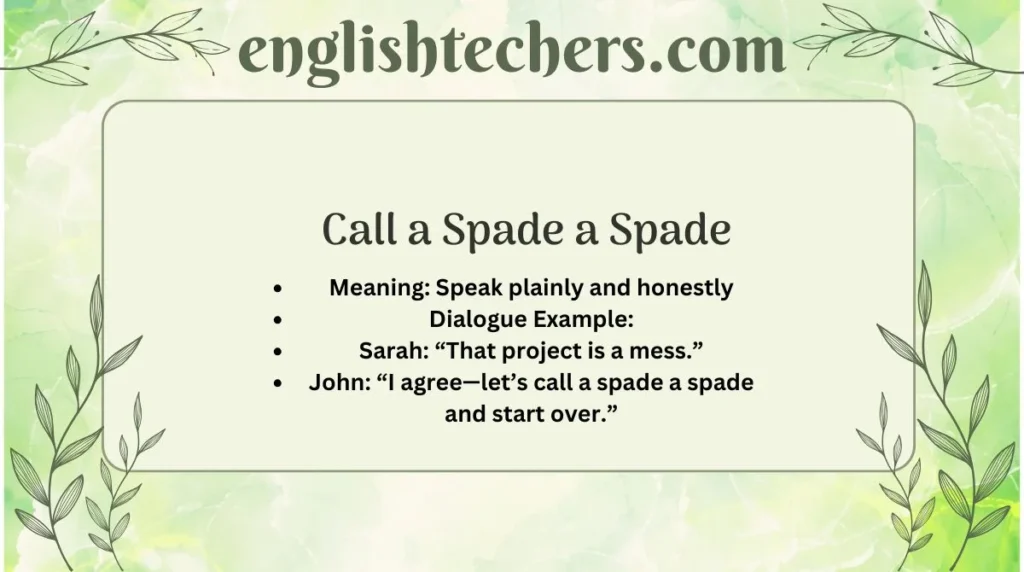
Meaning: Speak plainly and honestly
Dialogue Example:
- Sarah: “That project is a mess.”
- John: “I agree—let’s call a spade a spade and start over.”
9. On the Level
Meaning: Honest and straightforward
Usage Tip: Common in informal and professional settings. “I promise I’m on the level.”
10. Tell Tales
Meaning: Reveal secrets, often gossip
💡 Usage warning: Usually negative—don’t use for professional praise.
11. Shoot Straight
Meaning: Speak honestly, without hiding facts
Dialogue Example:
- Manager: “I need you to shoot straight about this report.”
- Employee: “It’s not finished yet, but here’s the status.”
12. Lay Bare
Meaning: Reveal something completely
Example Story: Jane finally laid bare her feelings to Mark, ending months of guessing and misunderstandings.
13. The Hard Truth
Meaning: Honest but unpleasant fact
Mini Exercise: Fill in the blank: “Sometimes, you just have to accept ________.” (Answer: the hard truth)
14. Give it to Someone Straight
Meaning: Tell someone honestly without beating around the bush
Example: “I’m going to give it to you straight—you need more practice for the exam.”
15. Blow the Whistle
Meaning: Expose wrongdoing
Cultural Note: Common in workplace and legal contexts. Originates from sports referees blowing whistles to signal a foul.
16. Come Clean
Meaning: Admit the truth about something
Dialogue Example:
- Mom: “Who broke the vase?”
- Tom: “I’ll come clean… it was me.”
17. Spill One’s Heart Out
Meaning: Share deep feelings honestly
Mini Cultural Tip: Often used in literature or emotional conversations.
18. Put One’s Cards on the Table
Meaning: Reveal intentions openly
💡 Fun twist: Commonly confused with “lay one’s cards on the table.” Both mean honesty but context differs slightly.
19. Naked Facts
Meaning: Undeniable truths
Example: “The report shows the naked facts of climate change—there’s no sugar-coating here.”
Extra: Idioms Used by Native Speakers in Real Life
- Casual speech: “Honestly, spill the beans!”
- Workplace: “We need to lay our cards on the table for the project.”
- Literature: “The novel reveals the naked truth about society.”
Idioms for Professional Settings
- Blow the whistle → Reporting misconduct
- Lay one’s cards on the table → Transparency in negotiations
- On the level → Honest communication in emails
Funny or Creative Truth Idioms
- “Cut to the chase” → Skip fluff, get to the real point
- “Shoot from the hip” → Speak honestly, sometimes recklessly
Exercises for Learners
Fill in the blanks:
- I didn’t want to hurt her feelings, so I hesitated to ________. (Answer: tell it like it is)
- The CEO finally ________ about the company’s losses. (Answer: laid bare)
- You need to ________ if you want to fix this mistake. (Answer: face the music)
Common Mistakes Learners Make
- Using casual idioms in formal writing (Spill the beans → wrong in an academic essay).
- Confusing similar idioms (lay bare vs lay one’s cards on the table).
- Overusing idioms in a single paragraph—can sound unnatural.
How to Use Idioms in Daily Life
- Speaking: Use mild idioms for casual chat, intense ones for serious topics.
- Writing: Add idioms in stories, emails, or blog posts for flavor.
- Professional: Stick to workplace-safe idioms like on the level or lay cards on the table.
FAQ
1: Are these idioms used in British and American English?
A: Most are common in both, but some like shoot from the hip are more American.
2: Can I use these idioms in formal writing?
A: Only workplace-safe idioms. Avoid casual ones like spill the beans.
3: Do idioms translate well in other languages?
A: Not always. Many are culturally specific, so learn equivalents carefully.
4: How can idioms help in IELTS speaking/writing?
A: They demonstrate natural language use, boosting your fluency score.
5: Can idioms sound rude if used incorrectly?
A: Yes, especially those implying blame or harsh honesty. Context matters.
Conclusion
Idioms for truth add personality, clarity, and emotional depth to your English. From casual chats to professional meetings, these 19+ phrases help you express honesty naturally and understand nuanced conversations.
Remember, context is key: some idioms are fun, others are serious, and a few are perfect for literature or writing.
Practice these idioms in daily speech, try the exercises above, and soon you’ll find yourself speaking like a native—honestly, clearly, and confidently.
Start small, pick one or two idioms today, and sprinkle them into conversations to see immediate improvement.

Thomas Reed is an experienced English teacher helping students learn with simple, clear lessons.
He focuses on improving speaking, grammar, and confidence through easy daily practice.