
Have you ever felt frustrated, stressed, or heartbroken but didn’t know how to put it into words? That’s where idioms come in! Idioms are colorful phrases that don’t always make sense literally but carry a strong emotional punch.
For example, if someone says, “I’m feeling under the weather,” you know they mean they’re sick—not literally lying under clouds!
Idioms for being upset are especially useful because emotions are universal, but words can vary. Imagine this: Sarah missed her flight, her coffee spilled, and her laptop crashed all in one morning.
She sighs and tells her friend, “I’m at my wit’s end.” Instantly, we understand her frustration without a long explanation.
Using these idioms can make your English sound more natural, expressive, and relatable, whether you’re chatting with friends, writing emails, or telling a story.
Fun Fact / Trivia
Did you know that many idioms about being upset have origins in old literature or everyday life? For example, “blow off steam” comes from steam engines in the 19th century—releasing pressure to prevent accidents. English idioms often paint pictures or metaphors, which makes them easier to remember and more fun to use!
Idioms for Upset
Here’s a collection of idioms grouped by intensity and context, with varied explanations and examples.
1. Mildly Upset / Irritated
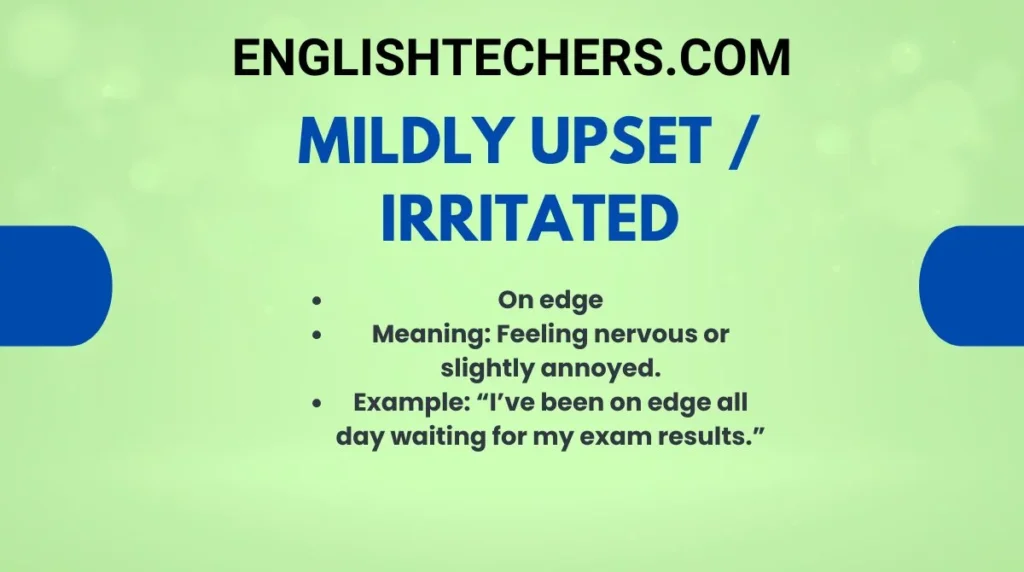
- On edge
Meaning: Feeling nervous or slightly annoyed.
Example: “I’ve been on edge all day waiting for my exam results.” - Bent out of shape
Dialogue:- Tom: “Why are you so quiet?”
- Anna: “Don’t get bent out of shape. I just need a minute.”
- Ruffled feathers
Mini cultural note: Commonly used in social or professional settings when someone is slightly offended.
Example: “His comments about the project ruffled a few feathers in the office.”
2. Stressed / Frustrated
- At your wit’s end
Story: Lucy had tried to fix her computer, clean the house, and cook dinner—all at once. “I’m at my wit’s end!” she cried. - Blow off steam
Example: “After work, I go jogging to blow off steam.”
Note: Often used for stress relief activities. - Go ballistic / hit the roof
Cultural tip: “Hit the roof” is slightly milder, while “go ballistic” is more intense and informal.
Example: “He went ballistic when he saw the unpaid bills.”
3. Heartbroken / Sad
- Down in the dumps
Example: “She’s been down in the dumps since her cat ran away.” - Cry over spilled milk
Mini story: “I failed the exam, but there’s no point crying over spilled milk. I’ll study harder next time.” - Brokenhearted / heart in pieces
Dialogue:- Sam: “I can’t believe she left me.”
- Max: “I know, you’re heartbroken, but time heals.”
4. Angry / Annoyed
| Idiom | Intensity | Example |
|---|---|---|
| See red | High | “I saw red when someone scratched my car.” |
| Lose one’s cool | Medium-High | “He lost his cool during the argument.” |
| Fly off the handle | High | “She flew off the handle after hearing the news.” |
- Usage warning: Avoid using extremely strong idioms like “go nuclear” in professional emails—it’s too informal!
5. Everyday Life / Humor
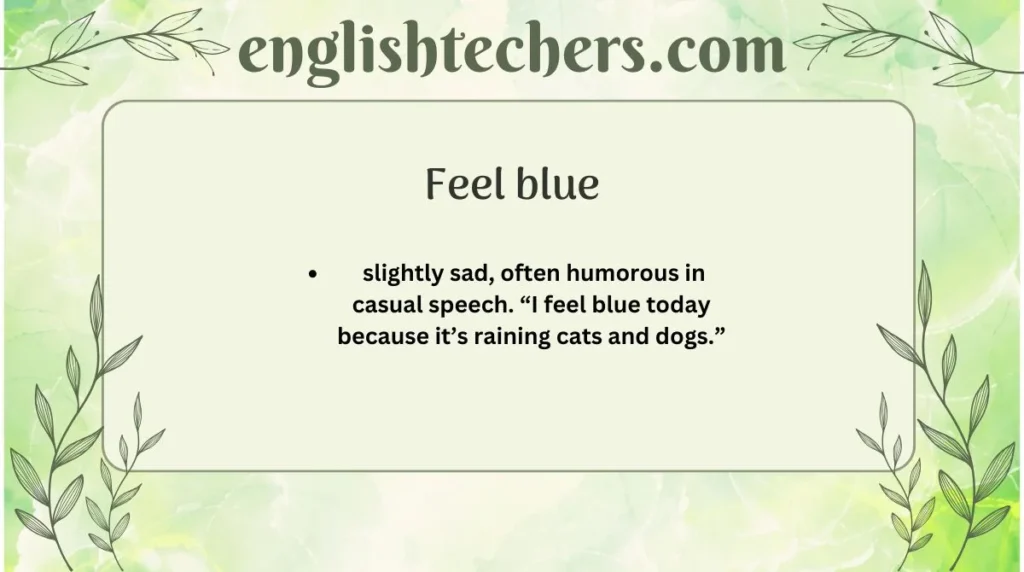
- Feel blue – slightly sad, often humorous in casual speech. “I feel blue today because it’s raining cats and dogs.”
- In a funk – mild irritability or gloom. “He’s in a funk after losing the game.”
- Upset the apple cart – cause trouble or disruption. “Her unexpected decision upset the apple cart at work.”
Idioms Used by Native Speakers in Real Life
Native speakers often mix idioms with slang:
- “I’m losing it today” → informal way to say you’re stressed.
- “She’s having a meltdown” → emotional, frustrated reaction.
- “That really got under my skin” → something annoying or upsetting.
Idioms in Literature
- Shakespeare: “Grief fills the mind so full of thoughts, it makes it unquiet.” (Upset through worry)
- Modern novels often use idioms like “broke my heart” or “at my wit’s end” to make characters’ emotions relatable.
Idioms for Workplace / Professional Settings
- Behind the eight ball – in a difficult situation.
- On thin ice – at risk of trouble.
- Up in arms – angry or protesting.
Example: “The team was up in arms about the sudden deadline change.”
Funny / Creative Idioms
- Mad as a hornet – extremely angry.
- Hot under the collar – embarrassed or annoyed.
- Blow a gasket – losing control emotionally.
Tip: Using these idioms in casual conversation adds humor and color to your speech.
Emotional Scale Table
| Emotion | Mild | Moderate | Intense |
|---|---|---|---|
| Upset | Ruffled feathers | On edge | At your wit’s end |
| Frustrated | In a funk | Blow off steam | Fly off the handle |
| Angry | Upset the apple cart | See red | Go ballistic |
| Sad | Feel blue | Down in the dumps | Brokenhearted |
Exercises / Practice Sentences
Fill in the blanks with an appropriate idiom:
- After losing the match, Jake was __________.
- Don’t __________ over your mistake—it’s not a big deal.
- She’s been __________ ever since her best friend moved away.
- The new policy really __________ among the employees.
- I went for a run to __________ after the stressful meeting.
How to Use Idioms in Daily Life
- Speaking: Use idioms in conversations to sound natural.
- Writing: Perfect for storytelling, blogs, or emails (avoid too casual in formal reports).
- Professional settings: Use mild idioms like “upset the apple cart” carefully; avoid slang like “blow a gasket.”
Common Mistakes Learners Make
- Translating idioms literally → “Cry over spilled milk” isn’t about actual milk!
- Overusing idioms → makes writing unnatural.
- Misusing intensity → using “fly off the handle” for a minor annoyance.
- Using informal idioms in formal writing.
- Confusing similar idioms → “see red” vs “hot under the collar.”
FAQ
1: Are these idioms formal or informal?
Mostly informal; mild ones like “on edge” can work in professional settings.
2: Can I use these in IELTS speaking/writing?
Yes! Idioms like “down in the dumps” or “at your wit’s end” show natural expression, but don’t overuse them.
3: Do native speakers use all idioms every day?
No, they pick idioms based on context, intensity, and audience.
4: Are idioms the same in British and American English?
Many are the same, but some differ. “Bum out” is more American; “knock for six” is British.
5: How can I remember idioms better?
Link them to personal experiences or short stories—like Sarah spilling coffee while “at her wit’s end.”
Conclusion
Idioms for being upset are powerful tools to express your feelings naturally and vividly. From mild irritation to deep heartbreak, there’s an idiom for every situation.
Using them will make your English sound lively, relatable, and human. Next time you feel frustrated, stressed, or heartbroken, try dropping an idiom in your conversation—your friends will understand your emotions instantly! Start with one or two today, and gradually add more to your emotional vocabulary.
Express yourself like a native speaker and have fun with your English!

Thomas Reed is an experienced English teacher helping students learn with simple, clear lessons.
He focuses on improving speaking, grammar, and confidence through easy daily practice.