
Imagine this: Sarah just won her first marathon. She’s exhausted, sweaty, and smiling from ear to ear. Her friend Jake shouts, “You really hit the jackpot today!” Sarah laughs, realizing that idioms like this can make English colorful, emotional, and fun.
Idioms are phrases where the meaning isn’t literal but conveys a feeling or idea creatively. For learners, mastering idioms is a gateway to sounding natural and confident in English.
Idioms about winning, success, and victory are especially useful—they pop up in sports, business, school, and everyday chats.
Whether you’re celebrating a personal achievement, encouraging a colleague, or narrating a story, these idioms add flair to your language.
In this guide, we’ll explore 16+ idioms for winning, grouped by context, intensity, and emotion, with examples, mini-stories, and exercises to help you use them naturally.
🎲 Fun Fact / Trivia
Did you know the idiom “hit the jackpot” comes from old slot machines in America? The term “jackpot” originally referred to a large prize in poker games.
Today, it’s used figuratively to describe any big success—like passing an exam or landing a dream job!
🏆 Idioms for Winning in Everyday Life
1. Hit the jackpot
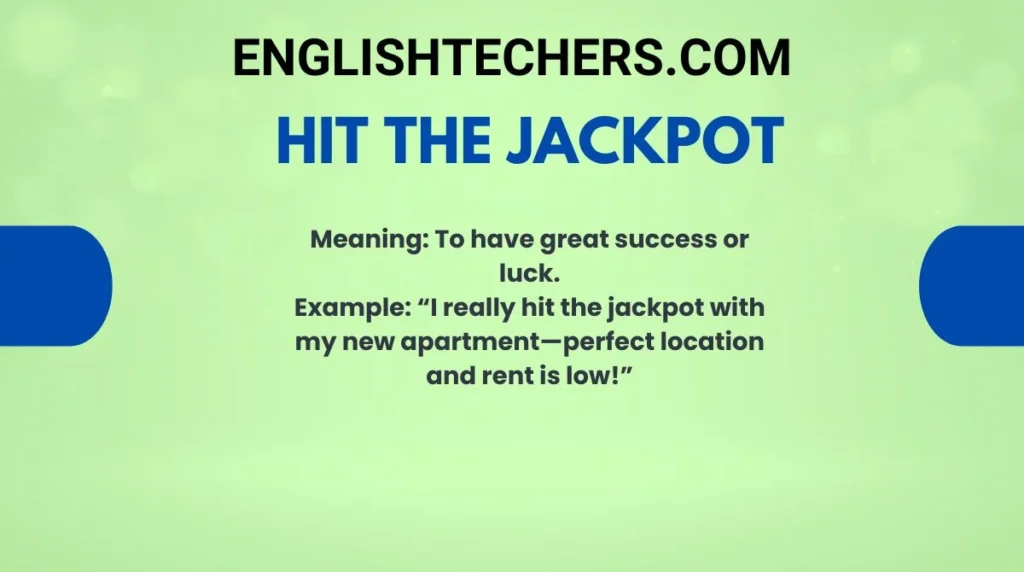
Meaning: To have great success or luck.
Example: “I really hit the jackpot with my new apartment—perfect location and rent is low!”
2. Come out on top
Dialogue format:
- Lisa: “How did your debate go?”
- Tom: “Tough competition, but I came out on top in the end.”
3. Pull ahead
Usage in sports or work: “Our team pulled ahead in the last quarter and won the championship.”
4. On a winning streak
Short paragraph example:
Rachel has been on a winning streak at trivia nights. She’s won three weeks in a row and feels unstoppable!
📊 Emotional Scale Table: Mild → Intense Wins
| Intensity | Idiom | Example |
|---|---|---|
| Mild | In the bag | “This project is in the bag; we just need to finish it.” |
| Moderate | Pull ahead | “He pulled ahead in the sales race last month.” |
| Strong | Hit the jackpot | “I hit the jackpot with this promotion!” |
| Intense | Knock it out of the park | “Your presentation knocked it out of the park!” |
📝 Idioms in Professional / Workplace Settings
5. Ace it
Micro-story:
Emma had a big client pitch. She walked in, confident, and aced it. The client signed the deal immediately.
6. Knock it out of the park
Usage warning: This idiom comes from baseball. Don’t use it in formal writing—stick to informal speech or casual emails.
7. Come up trumps
Mini cultural note: Common in British English. Means to succeed unexpectedly.
Example: “Despite a tough quarter, our team came up trumps in sales.”
8. Bring home the bacon
Dialogue:
- Mom: “How’s work?”
- Dad: “Busy, but I managed to bring home the bacon for the family this month.”
🎭 Funny or Creative Twists
9. Win hands down
“Mark won hands down in the talent show—no one came close.”
10. Take the cake
Mini exercise for learners: Guess the meaning: “Winning this game really takes the cake!”
(Hint: It’s something outstanding or remarkable.)
11. Make a killing
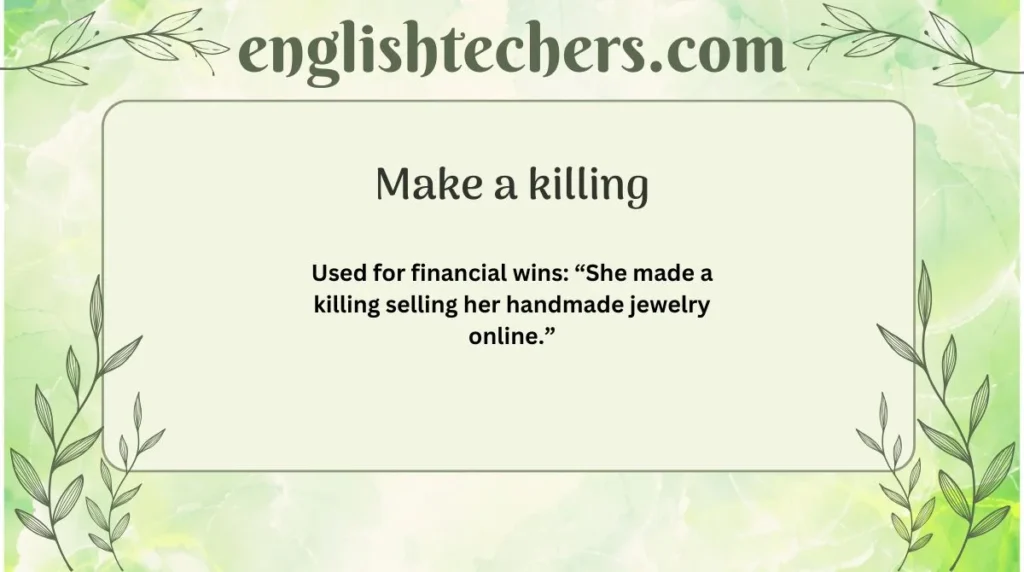
Used for financial wins: “She made a killing selling her handmade jewelry online.”
📚 Idioms in Literature
Writers often use idioms to convey victory dramatically:
- “The hero came out on top after a fierce battle.”
- “She hit the jackpot, not with gold, but with friendship.”
Tip: Idioms make stories relatable and emotionally engaging.
🏅 Idioms Used by Native Speakers
- Casual speech: “I aced my driving test today!”
- Workplace: “We really came up trumps with that new marketing strategy.”
- Sports commentary: “The striker knocked it out of the park in the final match.”
✏️ Exercises / Practice Sentences
Fill in the blanks with the correct idiom from the list:
- After months of preparation, she finally ________ her final exam.
- The startup team ________ with their unexpected success.
- Our favorite player ________ in last night’s game.
Answers: 1. aced it, 2. came up trumps, 3. knocked it out of the park
⚠️ Common Mistakes Learners Make
- Using idioms literally: “I hit the jackpot at the grocery store” (awkward unless humorous).
- Mixing idiom intensity: Saying “pull ahead” for a huge achievement—it’s usually moderate.
- Overusing idioms—one or two per conversation is natural.
- Ignoring context—“bring home the bacon” may sound informal in corporate emails.
- Confusing similar idioms: “come out on top” vs “win hands down”—the latter is stronger.
💡 How to Use Idioms in Daily Life
- Speaking: Add idioms in conversations to sound natural, e.g., “I aced the interview!”
- Writing: Use in informal emails or social media posts.
- Professional: Stick to milder idioms like come out on top or pull ahead.
- Storytelling: Idioms convey emotion quickly—great for speeches or presentations.
FAQ
1: Can idioms be used in formal writing?
Mostly no. Idioms are better for informal speech or casual writing.
2: Do all idioms translate well across cultures?
Not always. Bring home the bacon might confuse non-native speakers.
3: How can I remember idioms easily?
Use them in sentences, dialogues, and flashcards with visuals.
4: Are idioms important for IELTS or exams?
Yes! Using idioms naturally can improve speaking and writing scores.
5: Can I create my own idioms?
You can try! But native-like idioms are usually culturally rooted.
Conclusion
Idioms for winning are more than just phrases—they’re a passport to sounding like a confident, native English speaker.
From casual chats to professional meetings, these expressions help you celebrate success, motivate others, and make your language shine.
Start sprinkling them into your speech, experiment with dialogues, and notice how your friends or colleagues react.
Remember: the more you use them naturally, the more fluent you’ll feel. So pick one idiom today, use it in a sentence, and come out on top in your English journey!

Thomas Reed is an experienced English teacher helping students learn with simple, clear lessons.
He focuses on improving speaking, grammar, and confidence through easy daily practice.