Idioms are colorful expressions that mean more than the words suggest. Native speakers use them every day to add emotion, humor, and personality to language.
When you learn idioms, your English stops sounding like a textbook and starts sounding real.
Winter idioms are especially powerful. Winter is not just a season—it represents cold emotions, hard times, silence, distance, and survival. That’s why English is full of winter-based expressions.
Imagine this short scene:
It’s a cold January morning. You walk into the office late. Your boss looks at you and says, “You’re skating on thin ice.” No ice. No skates. But you instantly feel the danger. That’s the magic of idioms.
Learning idioms for winter helps you:
- Understand movies, books, and native conversations
- Express emotions like stress, sadness, or resilience
- Speak more naturally in daily and professional life
In this guide, you’ll explore 19+ winter idioms, grouped by emotion and real-life context, with stories, dialogues, cultural notes, and practice—so they actually stick.
❄️ Fun Fact / Trivia
Did you know?
Many winter idioms became popular during the Little Ice Age (1300–1850) in Europe, when winters were brutally cold.
People used winter imagery to describe danger, hardship, and emotional distance—and those expressions survived long after the snow melted.
🌬️ Mild Coldness & Distance (Daily Life)
1. Cold shoulder
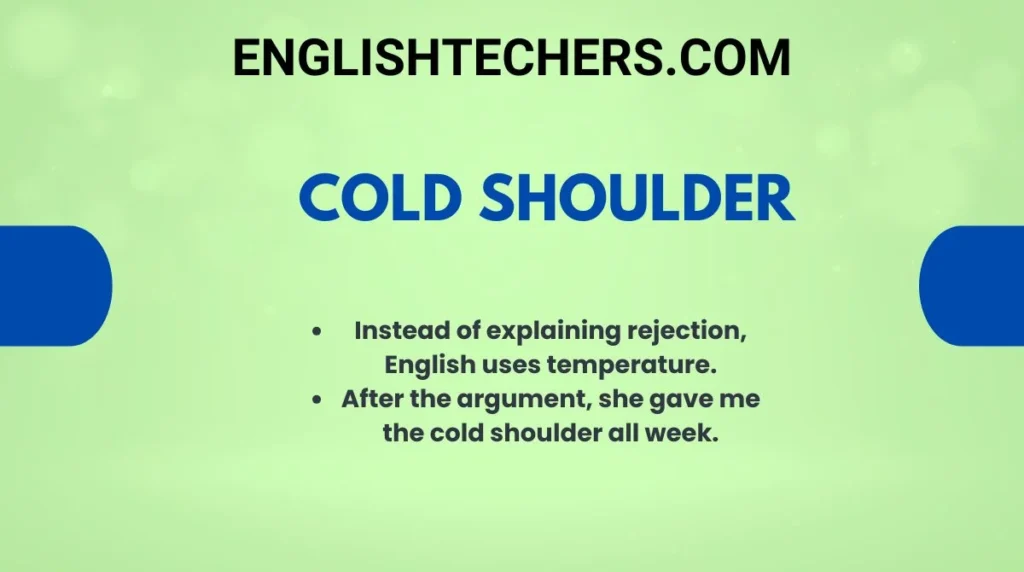
Instead of explaining rejection, English uses temperature.
After the argument, she gave me the cold shoulder all week.
Cultural note: Common in friendships and families. Very natural.
2. Left out in the cold
This idiom expresses emotional or social exclusion.
When the team celebrated without him, he felt left out in the cold.
3. Ice-cold
Used for people or reactions, not weather.
His ice-cold reply ended the conversation.
⚠️ Usage warning: Not used for polite distance—this sounds harsh.
❄️ Stress, Pressure & Risk (Workplace + Life)
4. Skate on thin ice
One wrong move can cause trouble.
Mini dialogue:
— Did you email the client again?
— Yes.
— Careful. You’re skating on thin ice.
5. Break the ice
This idiom is positive and social.
He told a joke to break the ice at the meeting.
💡 Tip: Perfect for presentations, interviews, networking.
6. Snowed under
Too much work, not weather.
I’m snowed under with deadlines this week.
📌 Professional-friendly idiom
7. On thin ice
Similar to skating on thin ice, but shorter.
After missing two deadlines, she’s on thin ice.
🧊 Emotional Pain & Hard Times
8. Cold comfort
Something that helps—but not much.
His apology was cold comfort after the damage was done.
9. Frozen out
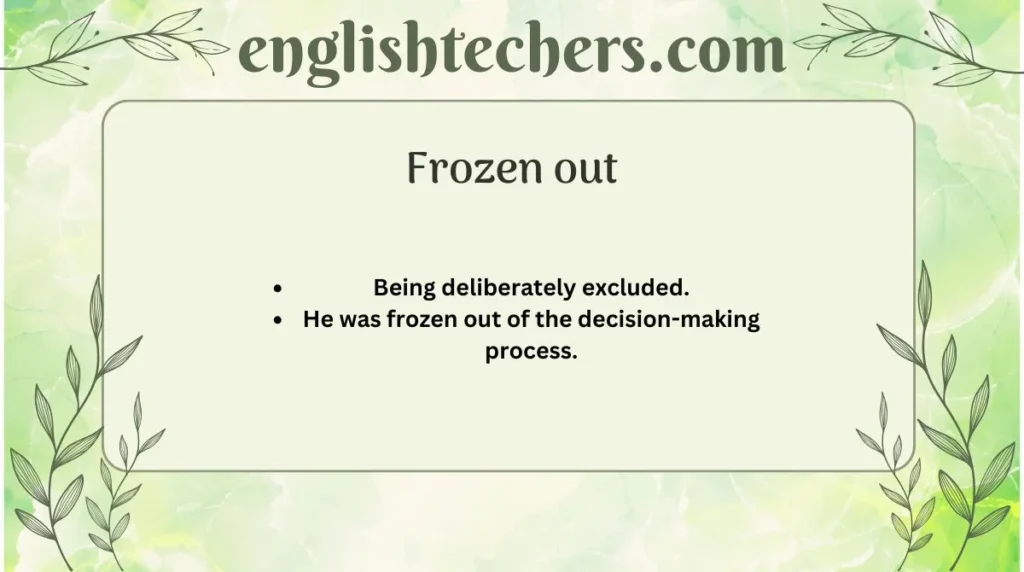
Being deliberately excluded.
He was frozen out of the decision-making process.
10. Heart of ice
Used in literature and drama.
The villain had a heart of ice.
📖 Idioms in literature: Often used to describe cruelty or emotional numbness.
❄️ Survival, Strength & Recovery
11. Weather the storm
Not just winter, but common in cold imagery.
They weathered the storm and rebuilt their business.
12. Out in the cold
More emotional than physical.
Without support, she felt out in the cold.
13. Cold snap
Short period of difficulty.
The company faced a cold snap after the merger.
😂 Funny & Creative Winter Idioms
14. Snowball effect
Small issue becomes big.
One complaint caused a snowball effect of problems.
15. Put something on ice
Pause something temporarily.
Let’s put the project on ice until March.
16. Freeze someone out
More aggressive than “cold shoulder.”
They froze him out of the group chat.
⚠️ Warning: Strong and negative tone.
🧊 Idioms in Real Native Use
17. Cold feet
Fear before action.
She got cold feet before quitting her job.
18. Chill out
Casual and friendly.
Chill out—it’s not that serious.
19. In cold blood
Emotionless action.
The crime was committed in cold blood.
📌 Serious context only
20. Ice in the veins
Staying calm under pressure.
The surgeon has ice in his veins.
🔥 Emotional Intensity Scale (Table)
| Emotion Level | Idioms |
|---|---|
| Mild | break the ice, chill out |
| Medium | cold shoulder, snowed under |
| High | frozen out, heart of ice |
| Extreme | in cold blood |
🧑💼 Winter Idioms for Professional Settings
Use these safely at work:
- Break the ice
- Snowed under
- Put on ice
- Weather the storm
Avoid in formal writing:
- heart of ice
- freeze someone out
📚 Idioms in Literature & Media
Winter idioms appear in:
- Shakespeare’s emotional contrasts
- Dickens’ hardship imagery
- Modern films showing isolation
They often symbolize emotional coldness or survival.
✍️ Mini Practice: Try It Yourself
Fill in the blanks:
- I wanted to speak, but I got ____ feet.
- She tried to ____ the ice with a smile.
- After the fight, he gave me the ____ shoulder.
(Answers: cold, break, cold)
🗣️ How to Use Winter Idioms in Daily Life
Speaking:
- Use 1 idiom per conversation
- Match emotion, not season
Writing:
- Blogs, emails, stories
- Avoid overuse
Professional:
- Stick to neutral idioms
- Avoid emotional extremes
❌ Common Mistakes Learners Make
- Using idioms too literally
- Mixing similar idioms incorrectly
- Using harsh idioms in formal emails
- Overusing idioms in one paragraph
FAQ
Are winter idioms only used in winter?
No. They describe emotions and situations year-round.
Are these idioms good for IELTS?
Yes, especially for speaking and writing tasks.
Can I use them in formal English?
Some, yes. Avoid emotional or violent ones.
Do all cultures use winter idioms?
Cold cultures use more. Warm cultures use heat imagery.
How many idioms should I learn?
Quality over quantity. Start with 5–7 common ones.
Conclusion
Winter idioms bring depth, emotion, and realism to your English. They help you express stress, distance, courage, and recovery in ways grammar alone cannot.
You don’t need to memorize all 19+ at once. Choose a few, practice them naturally, and let them become part of your voice.
Like winter itself, these idioms remind us that cold moments pass—and strong language helps us survive them. Start small, stay curious, and soon your English will feel warmer, sharper, and more alive.

Thomas Reed is an experienced English teacher helping students learn with simple, clear lessons.
He focuses on improving speaking, grammar, and confidence through easy daily practice.