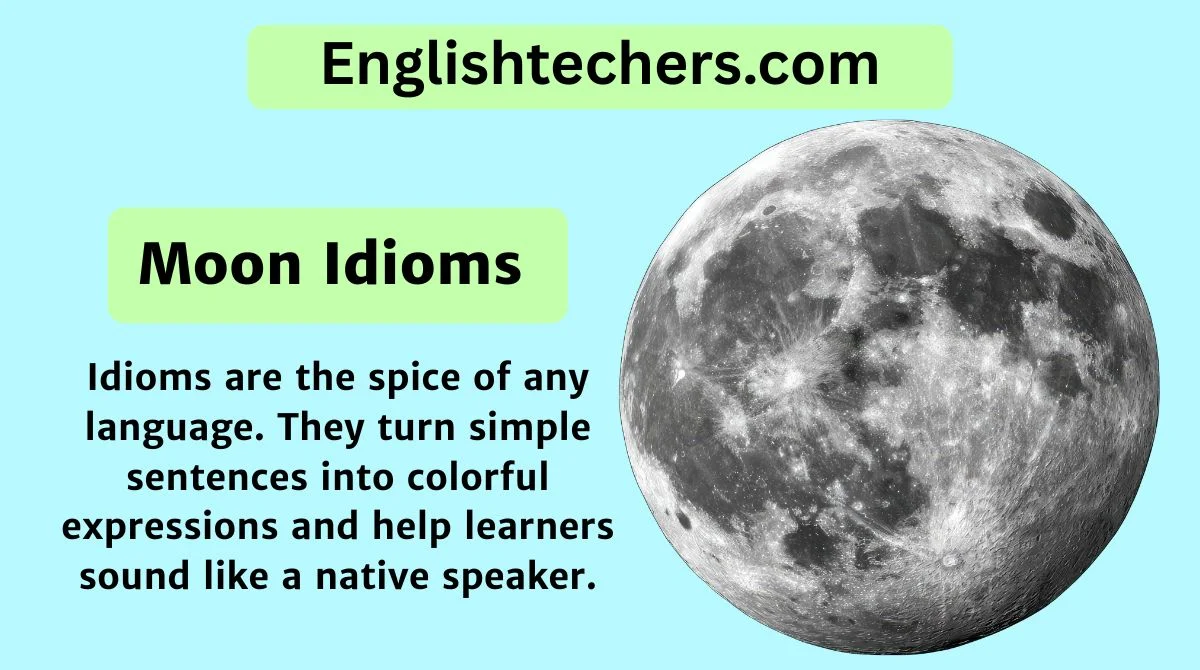
Idioms are the spice of any language. They turn simple sentences into colorful expressions and help learners sound like a native speaker.
Imagine saying, “I’m over the moon” instead of “I’m very happy”—suddenly, your English feels lively, emotional, and vivid! Moon idioms, in particular, are fascinating because they often convey feelings of wonder, love, longing, or even frustration. From the romantic pull of “honeymoon phase” to the excitement of “once in a blue moon,” these expressions add a poetic touch to everyday conversations.
Let me tell you a quick story: Sarah had just got her dream job. Her friend called her and asked, “How do you feel?” Sarah grinned and said, “I’m over the moon!” That tiny idiom instantly painted her joy for the listener.
Imagine if she had just said, “I’m very happy”—it wouldn’t have felt the same! Learning idioms like this can make your English richer, more emotional, and more engaging.
🌟 Fun Fact About Moon Idioms
Did you know that the phrase “once in a blue moon” comes from astronomy? A “blue moon” is a rare event when two full moons appear in a single calendar month.
English speakers borrowed this rarity to describe events that almost never happen. Idioms often mix cultural, historical, and natural references, making language both fun and educational!
🌙 20+ Idioms About the Moon
To make it easier, we’ve grouped these idioms by context and emotional intensity.
1. Expressing Happiness or Joy
- Over the moon
Meaning: Extremely happy
Example: “She was over the moon when she heard about her promotion.” - Moon over someone/something
Meaning: To daydream or be obsessed, often romantically
Dialogue:
Tom: “Why are you staring out the window?”
Jane: “I’m just mooning over my vacation photos.” - Promise the moon
Meaning: To make extravagant promises
Mini Story: A salesperson promised the moon to a client, saying, “This product will change your life!” Sometimes idioms like this warn about exaggeration.
2. Rare or Unusual Events
| Idiom | Meaning | Example |
|---|---|---|
| Once in a blue moon | Very rarely | “I eat fast food once in a blue moon.” |
| Reach for the moon | Aim for something difficult | “She decided to reach for the moon and start her own business.” |
| Many moons ago | A long time ago | “I met him many moons ago, back in college.” |
3. Love & Romance
- Honeymoon phase
Meaning: The early, happy period of a relationship
Cultural Note: Originally describing the first month of marriage when couples were most affectionate. - Moon-struck
Meaning: Infatuated or lovesick
Example: “He’s completely moon-struck over her.”
4. Frustration or Longing
- Ask for the moon
Meaning: To ask for something impossible
Usage Tip: Often used in professional or negotiating contexts. - Shoot for the moon
Meaning: Take a risk to achieve something big
Dialogue:
Alex: “Do you really think you can finish the project in one week?”
Rina: “I’m shooting for the moon!”
5. Humor & Fun Idioms
- Once in a red moon (creative twist on “blue moon”)
Meaning: Extremely rare
Fun Example: “We go karaoke once in a red moon!” - Moonlight as…
Meaning: To have a second job
Example: “She moonlights as a freelance writer on weekends.”
6. Idioms Used by Native Speakers in Real Life
- “I’m over the moon about the concert tickets!”
- “He’s been mooning over his crush all week.”
- “They promised the moon but delivered nothing.”
Pro Tip: Listening to movies, podcasts, or conversations will help you understand how naturally these idioms are used.
7. Idioms in Literature
Classic authors often use moon idioms for emotional depth. Shakespeare used “moon-struck” in A Midsummer Night’s Dream to describe whimsical or lovesick characters.
Modern literature may use “over the moon” to convey sudden joy or relief. Reading idioms in context strengthens memory and understanding.
8. Idioms for Professional/Workplace Settings
- Ask for the moon: When a colleague requests something unreasonable.
- Shoot for the moon: Used in goal-setting or motivational talks.
- Moonlight as…: Referring to employees’ side projects or freelance work.
Usage Warning: Avoid overly casual idioms like “moon over someone” in formal emails or reports.
9. Exercises / Practice Sentences for Learners
Fill in the blanks with a suitable moon idiom:
- She was __________ when she received the award.
- He’s been __________ over his old high school crush.
- They promised the client __________ but couldn’t deliver.
- I see you __________ as a writer on weekends.
- I only eat chocolate __________.
Answers: over the moon, mooning, the moon, moonlight, once in a blue moon
10. Emotional Scale Table (Mild → Intense)
| Emotion | Idiom Example | Intensity |
|---|---|---|
| Mild joy | Moon over something | 🌕 |
| Happiness | Over the moon | 🌕🌕 |
| Ambition | Shoot for the moon | 🌕🌕🌕 |
| Rare event | Once in a blue moon | 🌕🌕 |
| Romantic infatuation | Moon-struck | 🌕🌕🌕 |
11. How to Use Idioms in Daily Life
- Speaking: Sprinkle idioms into conversations for emotional impact.
- Writing: Perfect for emails, stories, or social media posts.
- Professional: Use cautiously; avoid casual idioms in formal reports.
12. Common Mistakes Learners Make
- Confusing literal and figurative meaning: “over the moon” doesn’t mean literally in space.
- Using too many idioms in one sentence, which can confuse listeners.
- Using informal idioms in formal writing.
- Misplacing prepositions: “moon over him” not “moon him over”.
- Translating idioms word-for-word from their native language.
FAQ)
1: Can I use moon idioms in formal writing?
A: Mostly no; idioms like “over the moon” are informal. Use them in essays sparingly.
2: Are moon idioms understood worldwide?
A: Some, like “once in a blue moon,” are common in English-speaking countries but may need explanation elsewhere.
3: Can idioms improve my IELTS speaking score?
A: Yes! Using idioms naturally shows range and fluency.
4: Do idioms have cultural references?
A: Often yes. Many moon idioms come from Western literature, culture, or astronomy.
5: How can I remember idioms better?
A: Practice with stories, dialogues, and writing exercises—context helps retention.
Conclusion
Moon idioms are not just phrases—they are emotional shortcuts that make your English shine. Whether expressing joy, ambition, or love, these idioms help you speak and write like a native.
Start small: pick a few idioms, use them in conversations or journals, and watch your English glow! 🌙 Keep practicing, and soon, you’ll be over the moon with your progress!

Thomas Reed is an experienced English teacher helping students learn with simple, clear lessons.
He focuses on improving speaking, grammar, and confidence through easy daily practice.