The sky isn’t just above us—it’s a treasure trove of colorful expressions in English. Idioms about the sky help us convey emotions, describe moods, and even add humor to everyday conversation.
Imagine telling your friend, “I’m on cloud nine!” after acing an exam—it instantly communicates joy without a single plain word.
Idioms can be tricky for learners because their meanings often aren’t literal. Take “under the weather”—you might think it’s about rain, but it actually means feeling ill.
Similarly, sky idioms mix imagery with feelings, making your speech more vivid. For example, one cloudy morning, Anna sighed, “I feel like a cloud over a stormy sea today,” showing her frustration in a poetic way.
By learning sky idioms, you’ll not only sound more like a native speaker but also understand literature, movies, and daily conversations better.
Plus, these idioms often carry cultural nuances that textbooks rarely teach. Ready to explore the sky? Let’s soar!
🌟 Fun Fact About Sky Idioms
Did you know that many sky idioms date back to Old English and Shakespearean times? Expressions like “reach for the stars” or “pie in the sky” were used centuries ago to inspire ambition or hint at unrealistic dreams.
The sky has always been a metaphor for hope, dreams, and limitless possibilities.
☁️ Sky Idioms Grouped by Emotion
1. Joy and Happiness
| Idiom | Meaning | Example |
|---|---|---|
| On cloud nine | Extremely happy | “She was on cloud nine after getting the promotion.” |
| Over the moon | Ecstatic | “He was over the moon when his novel got published.” |
| Blue-sky thinking | Creative, optimistic ideas | “Our team used blue-sky thinking to plan the new product.” |
Mini cultural note: In English, the sky often symbolizes positivity and freedom, so happy idioms tend to reference clear, bright skies.
2. Frustration or Stress
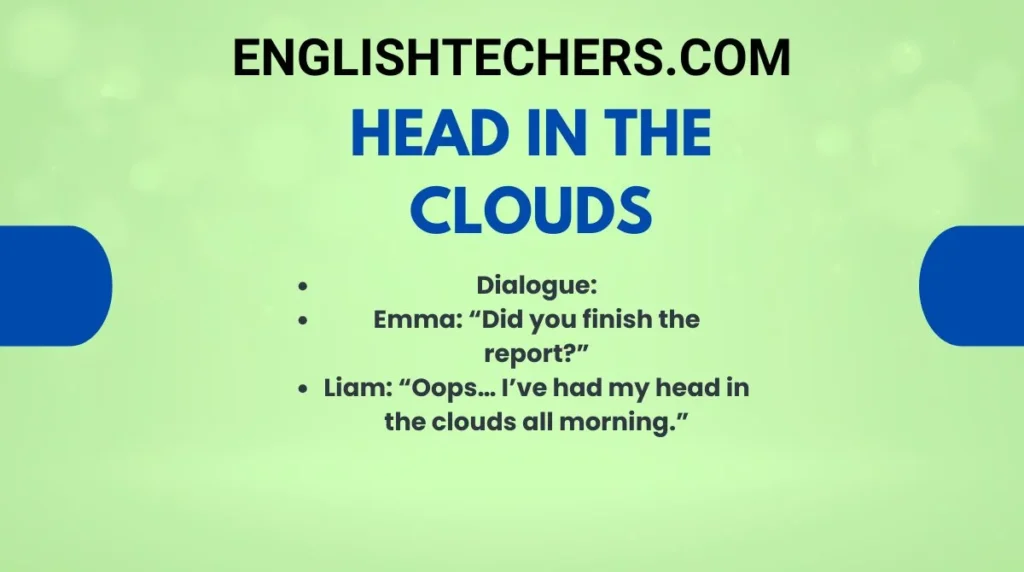
- Head in the clouds
Dialogue:
Emma: “Did you finish the report?”
Liam: “Oops… I’ve had my head in the clouds all morning.”
Meaning: Distracted, daydreaming. - Pie in the sky – This idiom warns about unrealistic expectations.
Example: “Thinking you’ll get a million-dollar deal in a week is just pie in the sky.” - Stormy weather ahead – Warning about upcoming difficulties.
Mini exercise: Make a sentence predicting challenges at work using this idiom.
3. Surprise or Astonishment
- Stars in your eyes – Dreamy excitement or idealism.
Micro-story: Lucy saw her favorite actor and whispered, “I’ve got stars in my eyes!” - Sky-high – Extremely high, often used for prices or emotions.
Example: “Rent prices in the city are sky-high these days.”
Usage warning: Don’t confuse “sky-high” with literal height—it’s metaphorical.
4. Romance and Inspiration
- Reach for the stars – Aim high, pursue big dreams.
Example: “He decided to reach for the stars and start his own business.” - Cloud nine love – Being extremely happy in love.
Dialogue:
Sophie: “How’s your new relationship?”
Max: “I’m on cloud nine, honestly!”
Mini cultural tip: Romantic sky idioms often feature clouds, stars, and moons, creating poetic imagery.
5. Daily Life / Work Context
- Under the weather – Feeling sick.
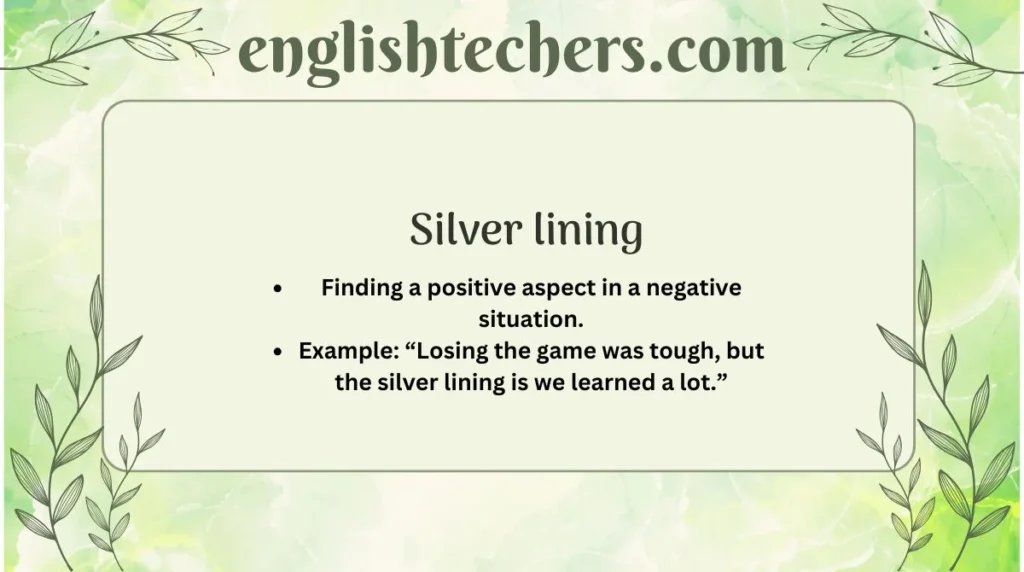
Example: “I can’t join the meeting today; I’m feeling under the weather.” - Silver lining – Finding a positive aspect in a negative situation.
Example: “Losing the game was tough, but the silver lining is we learned a lot.” - Skyrocket – Increase rapidly, especially in business.
Example: “Our sales skyrocket after the new marketing campaign.”
Mini exercise: Use “silver lining” to describe a challenging day at work.
6. Funny or Creative Twists
- Cloudy with a chance of meatballs – Playful exaggeration for unpredictable situations.
- Head in the clouds, feet on the ground – Daydream but stay practical.
Dialogue:
Tom: “I want to travel the world, invent a robot, and write a novel this year!”
Nina: “Head in the clouds, feet on the ground, Tom. Start small.”
🌤️ Emotional Scale Table
| Emotion Intensity | Idioms |
|---|---|
| Mild upset | Head in the clouds, pie in the sky |
| Frustrated | Stormy weather ahead, sky-high |
| Happy / Excited | On cloud nine, over the moon, stars in your eyes |
| Romantic / Dreamy | Cloud nine love, reach for the stars |
📚 Idioms in Literature
Classic literature often uses sky imagery. Shakespeare wrote, “I am one who comes to the clouds,” symbolizing aspiration. Modern novels and poetry frequently use clouds, stars, and skies to represent emotions, dreams, or destiny.
Tip for learners: When reading literature, highlight sky idioms—they often carry deeper metaphorical meanings.
💼 Professional / Workplace Usage
- Blue-sky thinking – Creative brainstorming in meetings.
- Skyrocket profits – Discussing financial growth.
- Cloud nine moment – Celebrating team success.
Quick tip: Not every idiom suits professional emails; “on cloud nine” is casual, while “blue-sky thinking” works well in presentations.
✍️ Exercises for Learners
- Write three sentences using “on cloud nine.”
- Create a dialogue including “stormy weather ahead.”
- Describe a challenging day using “silver lining.”
⚠️ Common Mistakes Learners Make
- Using literal meanings: “I’m under the weather” doesn’t mean you’re outside.
- Mixing idioms: “I’m over the moon and under the weather” → confusing.
- Using formal idioms in casual speech: “Blue-sky thinking” in a chat may sound odd.
- Misplacing intensity: Don’t use “cloud nine” for mild happiness.
- Overusing idioms: One or two per sentence is enough for natural flow.
FAQ
1: Can sky idioms be used in formal writing?
Yes, but choose carefully. “Blue-sky thinking” works for professional reports; “cloud nine” is casual.
2: Do all cultures use sky idioms?
No, metaphors vary. In some cultures, water or animals replace the sky in idioms.
3: Can sky idioms be used in IELTS or exams?
Absolutely. They show vocabulary range and fluency, but use naturally, not forced.
4: Are sky idioms only poetic?
Not at all. Many are everyday expressions in conversation, business, and media.
5: How to remember idioms effectively?
Group by emotion or context, use them in dialogues, and practice mini-stories.
🌈 How to Use Idioms in Daily Life
- Speaking: Add emotion or humor: “I’m on cloud nine after lunch!”
- Writing: Use in blogs, letters, or emails to sound lively.
- Professional: Use idioms like “blue-sky thinking” in meetings or presentations.
Conclusion
Sky idioms are a fun, expressive way to enhance your English. From happiness to frustration, literature to the workplace, these idioms help you communicate naturally and vividly.
By practicing them in dialogues, mini-stories, or daily speech, you’ll soar in fluency and confidence. So next time you talk, don’t just look at the sky—speak like it’s part of your language!

Thomas Reed is an experienced English teacher helping students learn with simple, clear lessons.
He focuses on improving speaking, grammar, and confidence through easy daily practice.