

Last updated on September 17th, 2026 at 06:13 am
Have you ever met someone who seems to know everything? Or perhaps a friend who always finds a clever solution to any problem?
In English, we don’t just call them “smart”—we have colorful idioms that capture intelligence, cleverness, and wit. Idioms are expressions whose meaning isn’t literal but culturally understood.
They make your language sound natural, lively, and engaging.
Imagine this: Sarah just solved a tricky problem at work that had everyone scratching their heads.
Instead of saying, “She’s smart,” her colleague said, “Sarah really has a head on her shoulders.” That small phrase not only shows her intelligence but adds personality to the conversation.
Using idioms like this can make you sound more fluent, confident, and relatable in both casual chats and professional settings.
In this article, you’ll discover 23+ idioms for smart people, learn how to use them naturally, and see examples from real life, literature, and workplaces.
By the end, you’ll be ready to sprinkle your conversations with clever expressions that make your English shine.
Fun Fact / Trivia
Did you know that many English idioms for intelligence come from body parts or nature? For example, “a sharp mind” compares your brain to a knife, while “bright as a button” links smarts to shining objects. These idioms have been used for centuries in literature and everyday speech, making them timeless tools for expressing cleverness.
Idioms Grouped by Context and Intensity
1. Mild Praise for Intelligence (Friendly Compliments)
| Idiom | Meaning | Example |
|---|---|---|
| A head on one’s shoulders | Practical intelligence | “Trust Jane to handle this—she has a head on her shoulders.” |
| Bright as a button | Smart, quick thinker | “You’re bright as a button, Sam! That was quick.” |
| Sharp as a tack | Very clever | “He solved the puzzle in five minutes—sharp as a tack!” |
Dialogue Example:
- Anna: “Who figured out the new software so fast?”
- Ben: “Oh, that’s Leo—sharp as a tack!”
2. Work and Professional Settings
Some idioms are perfect for the office or academic environment:
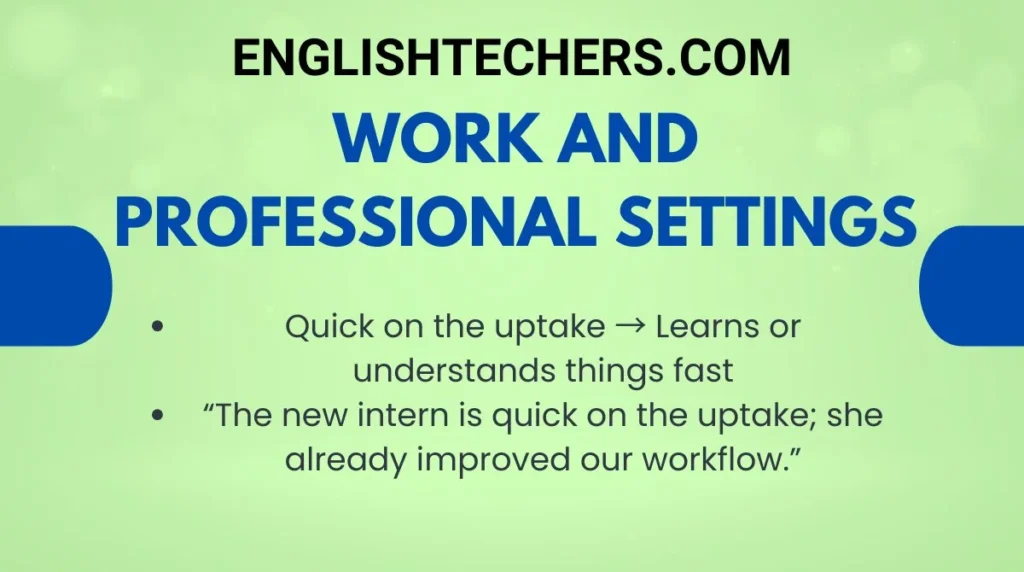
- Quick on the uptake → Learns or understands things fast
“The new intern is quick on the uptake; she already improved our workflow.” - Think on one’s feet → Make smart decisions quickly
“During the meeting, he had to think on his feet when the client asked unexpected questions.” - A brainiac → Informal, very intelligent person
“Don’t worry about the math test—our brainiac, Jason, can help.”
Usage Tip: Avoid overusing informal idioms like brainiac in formal writing; save them for spoken or casual contexts.
Natural Ways to Describe Intelligence in English
English speakers use many colorful expressions to describe intelligent, clever, or quick-thinking people. Instead of always using words like smart, clever, or intelligent, you can use idioms to make your English more expressive. These phrases are useful when talking about someone’s abilities, problem-solving skills, knowledge, or good decisions. You may hear them in casual conversations, movies, books, and workplace discussions. Learning these expressions can help you understand native speakers and describe people more naturally. Practice each idiom in a sentence and notice whether it sounds friendly, humorous, formal, or informal.
3. Idioms in Literature & Storytelling
Authors love idioms because they paint characters quickly:
- Know which side your bread is buttered → Knows what benefits them
Example from classic literature: “He knew which side his bread was buttered, always staying close to powerful allies.” - The brains behind → The mastermind
“Sherlock Holmes is the brains behind solving London’s mysteries.” - Clever as a fox → Very cunning
Mini Story: In a village, a fox always outsmarted hunters. People started calling clever villagers “clever as a fox”.
4. Funny or Creative Idioms
Adding humor makes idioms memorable:
- Not the sharpest tool in the shed → Slightly sarcastic for someone less smart
“Tom forgot his keys again—not the sharpest tool in the shed, eh?” - More brains than a zombie → Playful exaggeration
“After acing the quiz, he had more brains than a zombie today!” - Smart cookie → Clever, clever in a likable way
“You figured out that puzzle so fast! Smart cookie!”
5. Daily Life and Casual Contexts
Idioms often appear in small talk or everyday observations:
- Ahead of the curve → Smarter than others, especially in trends or skills
“Lila’s fashion sense is ahead of the curve—she predicts trends before they happen.” - Has a mind like a steel trap → Remembers and processes information quickly
Dialogue:- Mia: “How does he remember all those names?”
- Zoe: “He has a mind like a steel trap!”
- On the ball → Alert, attentive, and intelligent
“The teacher praised Sarah for being on the ball during the group project.”
6. Emotional Scale Table (Smartness in Different Situations)
| Situation | Idiom | Intensity |
|---|---|---|
| Daily intelligence | On the ball | Mild |
| Problem-solving | Think on one’s feet | Moderate |
| Exceptional intellect | A brainiac | Intense |
| Cunning | Clever as a fox | Intense |
| Quick learning | Quick on the uptake | Moderate |
How to Use Idioms in Daily Life
- Speaking: Sprinkle idioms naturally in conversations to sound fluent.
“Don’t worry, she’s got a head on her shoulders.” - Writing: Use sparingly in essays or emails for a creative touch. Avoid overloading your text.
- Professional Settings: Opt for neutral idioms like quick on the uptake or think on one’s feet. Avoid playful idioms like more brains than a zombie unless your workplace is casual.
Common Mistakes Learners Make
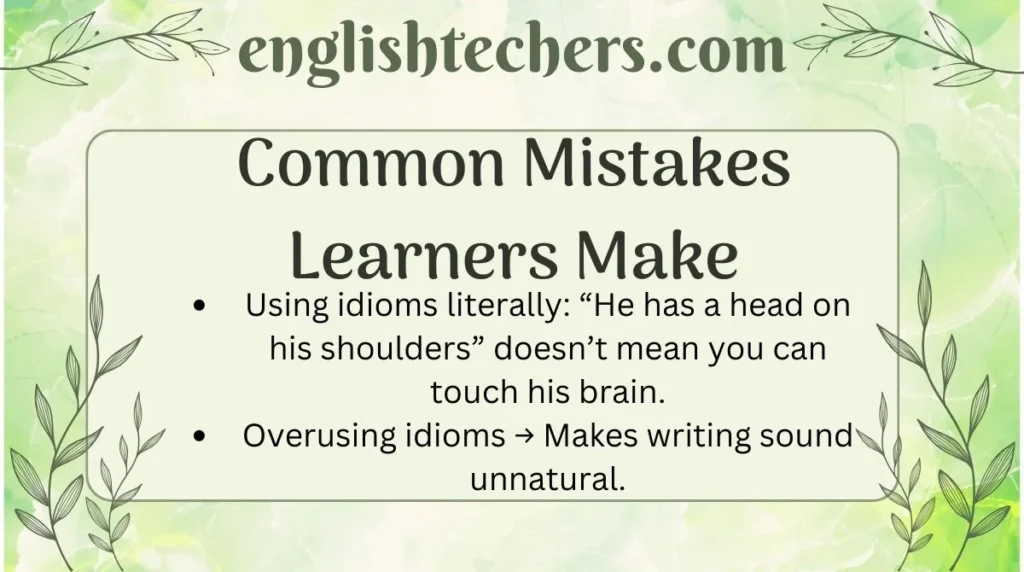
- Using idioms literally: “He has a head on his shoulders” doesn’t mean you can touch his brain.
- Overusing idioms → Makes writing sound unnatural.
- Mixing idioms with incorrect grammar → “She is a sharp as tack” ❌ correct: “sharp as a tack”.
- Applying informal idioms in formal writing → Avoid phrases like brainiac in reports.
- Confusing similar idioms → “Clever as a fox” ≠ “Smart cookie”; one implies cunning, the other likability.
Clever Expressions for Everyday Conversations
Smart-person idioms can make everyday conversations more interesting when you want to praise someone’s intelligence or describe a clever action. Native speakers often use these phrases when discussing students, coworkers, friends, or people who solve problems quickly. Some expressions may be complimentary, while others can sound playful or sarcastic depending on the tone. Understanding the context will help you use them correctly. Try creating short examples about someone who learns quickly, gives useful advice, or finds a creative solution. Regular practice will help you describe intelligence with greater confidence and natural English.
Exercises / Practice Sentences
Fill in the blanks with suitable idioms:
- Jenna solved the issue in minutes. She is really ________.
- Don’t worry, Mark always knows how to handle tricky situations. He can ________.
- That new engineer is extremely intelligent. Truly a ________.
- I forgot my appointment, clearly I’m not ________.
- Lisa always predicts trends early—she’s ________.
FAQ
1: Are idioms for smart people used the same way in the US and UK?
Mostly yes, but some like smart cookie are more common in the US.
2: Can I use idioms in IELTS or exams?
Yes! Using idioms correctly can boost your speaking and writing scores, but avoid overuse.
3: Are idioms formal or informal?
Some are neutral (quick on the uptake), others are casual (more brains than a zombie). Choose according to context.
4: Can idioms be literal?
No. Idioms are figurative, so saying “a head on her shoulders” literally is incorrect.
5: How can learners remember idioms easily?
Use them in stories, dialogues, and daily life, and group them by context (work, humor, literature).
Conclusion
Idioms are powerful tools that make your English vivid, natural, and expressive.
From workplace genius to witty storytellers, knowing 23+ idioms for smart people will let you describe intelligence with flair.
Start small, practice in daily conversations, and soon you’ll be impressing friends, teachers, and colleagues alike. Embrace these idioms and make your language smarter today!

Thomas Reed is an experienced English teacher helping students learn with simple, clear lessons.
He focuses on improving speaking, grammar, and confidence through easy daily practice.