
Travel isn’t just about packing your bags and catching a plane—it’s about experiencing new cultures, meeting people, and, sometimes, getting lost along the way.
But imagine this: you’re telling a friend about your wild backpacking trip, and instead of saying “I got lost” or “I had a lot of fun,” you drop idioms like a native speaker.
Idioms are phrases whose meanings aren’t literal, and they make your English sound more natural, playful, and expressive.
For example, last summer, Sarah told me about her road trip: “We were really flying by the seat of our pants when our GPS failed in the mountains!”
That single idiom perfectly captured her improvisation and stress without a long explanation.
For learners, idioms for travelling are incredibly useful—they help you describe adventures, mishaps, and emotions vividly.
In this article, we’ll explore 20+ idioms for travelling, grouped by context and emotion, plus mini-stories, exercises, and cultural tips so you can use them confidently in conversation, writing, and professional settings.
🎉 Fun Fact About Travel Idioms
Many travel idioms date back hundreds of years, rooted in exploration, trade, and seafaring. For instance, the phrase “off the beaten path” originally referred to avoiding well-trodden trade routes. Today, it’s about seeking unique experiences while travelling.
🌟 Idioms for Adventure and Spontaneity
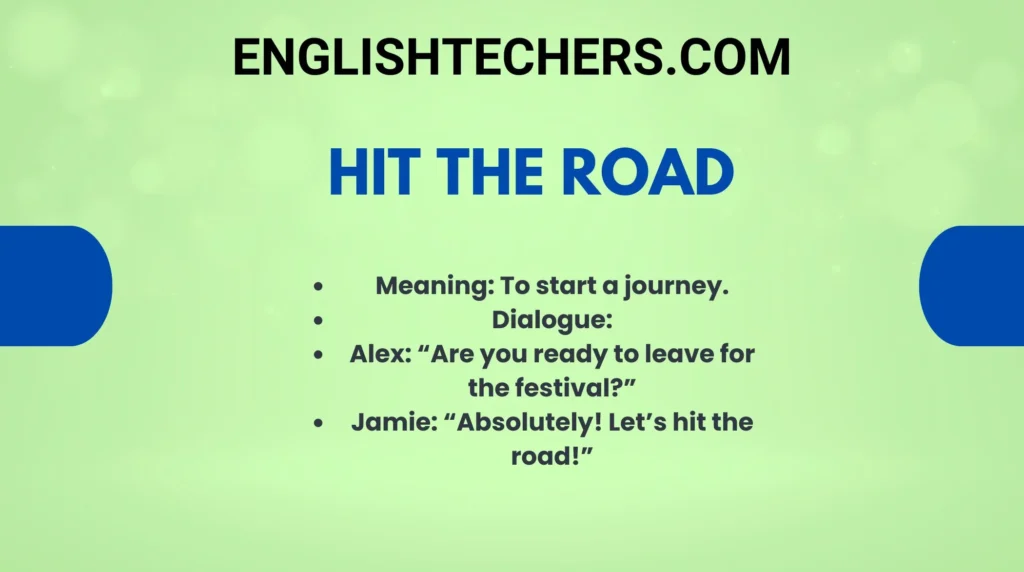
- Hit the road
Meaning: To start a journey.
Dialogue:
Alex: “Are you ready to leave for the festival?”
Jamie: “Absolutely! Let’s hit the road!” - Go the extra mile
Meaning: To make more effort than usual.
Story: Mia missed her train but decided to walk five extra miles to reach the countryside village—she truly went the extra mile. - Up in the air
Meaning: Uncertain or undecided plans.
Example: Our trip to Iceland is still up in the air because of the weather.
✈️ Idioms for Travel Mishaps
| Idiom | Meaning | Example |
|---|---|---|
| Miss the boat | Miss an opportunity | I missed the boat on booking early-bird flights. |
| Behind the eight ball | In a difficult situation | Losing my passport put me behind the eight ball at the airport. |
| Off the beaten path | Away from usual routes | We discovered a hidden cafe off the beaten path. |
Cultural Tip: Native speakers love these idioms to describe unexpected mishaps with a humorous tone.
😅 Funny Travel Idioms
- Flying by the seat of your pants – improvising without a plan.
“Our hotel reservation got lost, so we were flying by the seat of our pants!” - Throw in the towel – give up (often humorously).
Story: Jake tried hiking in a storm: “After 10 minutes, I threw in the towel and went back to the lodge.” - Hit the jackpot – unexpectedly find something great.
Example: “We hit the jackpot with that tiny bakery in Rome—best pastries ever!”
📝 Idioms for Stressful Travel Situations
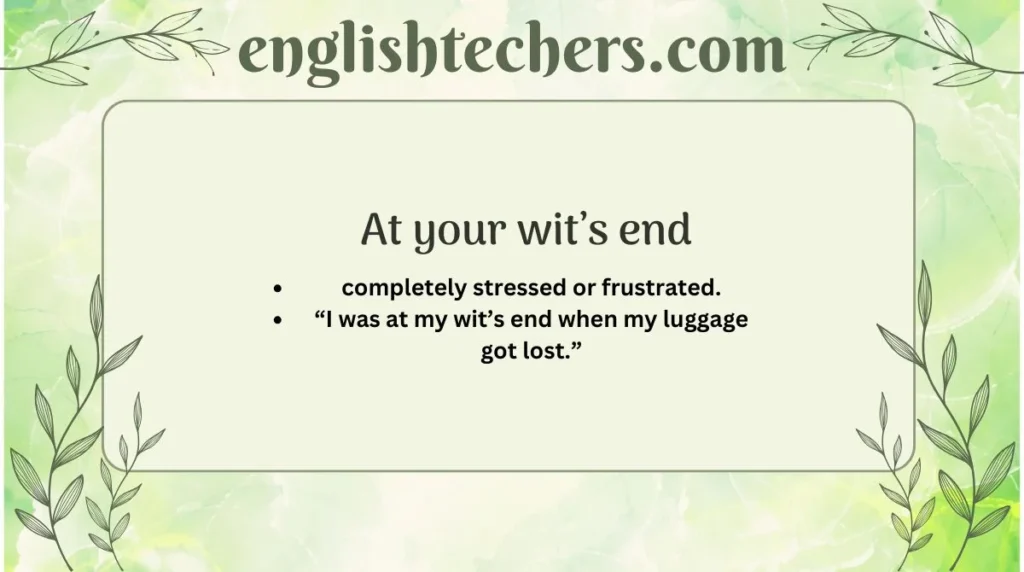
- At your wit’s end – completely stressed or frustrated.
“I was at my wit’s end when my luggage got lost.” - In hot water – in trouble.
Dialogue:
Sam: “Why are you calling the embassy?”
Lara: “I’m in hot water. My visa expired yesterday!” - Up the creek without a paddle – in a hopeless situation.
Story: Two friends stranded in the desert realized they were up the creek without a paddle when their car broke down.
🌎 Idioms Used by Native Speakers in Real Life
- Pack light – carry only essentials.
- Travel light – similar, but also figurative (live simply).
- Break new ground – explore or do something innovative.
- Call it a day – stop after hard work, often used after a long hike or tour.
Usage Note: These idioms are casual but can appear in professional travel blogs or tourism content.
📚 Idioms in Literature and Media
Writers often use travel idioms to create imagery or humor:
- “He was flying by the seat of his pants across Europe, unsure if he’d even make it to Paris.” – shows spontaneity.
- Travel memoirs love “off the beaten path” to highlight unique experiences.
💼 Professional/Workplace Travel Idioms
- On the road – often used for business travel.
“I’ll be on the road for conferences this week.” - Touch base – meet or communicate briefly.
“Let’s touch base after your trip to discuss the report.” - Plan ahead – essential for professional trips.
- Get your feet wet – try something new, often in a work setting.
🧩 Creative Exercises for Learners
- Fill in the blank:
- “We got lost in Venice, but it was fun—we were really ________ by the seat of our pants.”
- Match idioms with emotions: EmotionIdiomStressAt your wit’s endExcitementHit the roadSurpriseHit the jackpot
- Mini writing prompt: Write a 3-sentence story using three travel idioms you learned.
⚡ Emotional Intensity Scale Table
| Intensity | Idioms | Context |
|---|---|---|
| Mild | Pack light, Touch base | Everyday travel planning |
| Moderate | Hit the road, Off the beaten path | Adventure, fun |
| Strong | At your wit’s end, Up the creek without a paddle | Travel mishaps, stressful situations |
🚀 How to Use Idioms in Daily Life
- Speaking: Add one idiom per sentence naturally; don’t overuse.
- Writing: Use idioms to make blogs, emails, or travel stories more engaging.
- Professional: Stick to business-friendly idioms like plan ahead, touch base, or on the road.
Common Mistakes Learners Make:
- Translating idioms literally (“up the creek without a paddle” → “up a river with no boat”).
- Using idioms in formal writing where they sound too casual.
- Mixing contexts (hit the jackpot for something negative).
- Overstuffing sentences with multiple idioms.
- Mispronouncing idioms or splitting phrasal idioms incorrectly.
FAQ
1: Can I use travel idioms in formal writing?
A: Use sparingly and only if the tone allows; business emails usually avoid humor or casual idioms.
2: Are travel idioms universal?
A: Some are culture-specific, e.g., off the beaten path works in English but may need explanation in other languages.
3: How can idioms help in IELTS speaking?
A: Idioms show natural, fluent language use; don’t overuse, and always know the meaning.
4: Can I use idioms in social media posts?
A: Absolutely! They’re perfect for captions, stories, or travel blogs.
5: Are there beginner-friendly travel idioms?
A: Yes! Start with hit the road, pack light, on the road, and off the beaten path.
Conclusion
Idioms are like the spice in your language recipe—they make your stories vibrant, your experiences relatable, and your conversations fun.
Whether you’re navigating airport chaos, enjoying a spontaneous road trip, or writing a travel blog, these 20+ idioms for travelling can turn simple sentences into memorable expressions.
Start sprinkling them into your conversations, practice with mini-exercises, and watch your English transform from ordinary to native-like. Happy travels and happy idiom adventures!

Thomas Reed is an experienced English teacher helping students learn with simple, clear lessons.
He focuses on improving speaking, grammar, and confidence through easy daily practice.



