
Imagine hearing on the news that someone was charged with “second degree murder.” You may wonder: Is that different from first degree murder?
Is it planned? Is it accidental? Many people feel confused when they hear legal terms like this.
The phrase sounds technical and serious. It appears in court cases, crime reports, and legal dramas.
But most people do not fully understand what it actually means. The difference between murder degrees can change a person’s sentence by decades.
This guide explains everything in simple language. You will learn the legal definition, how it differs from other types of homicide, where confusion happens, and how courts use the term today.
By the end, you will clearly understand what second degree murders meaning involves in modern law.
Quick Definition of “Second Degree Murders”
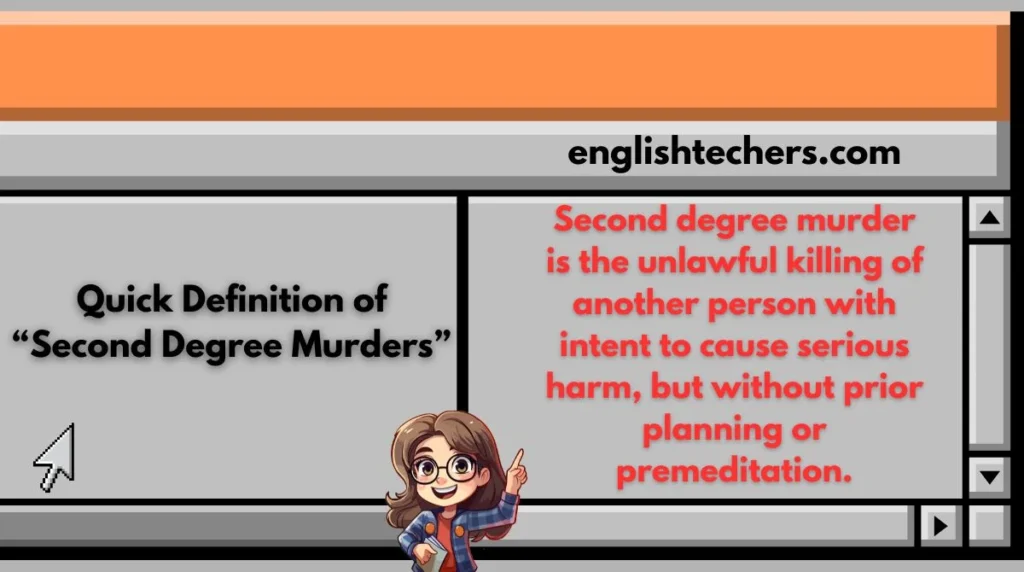
Second degree murder is the unlawful killing of another person with intent to cause serious harm, but without prior planning or premeditation.
It usually involves intent to kill or cause severe injury, but the act was not carefully planned in advance. In some states or countries, it may also include extreme recklessness that shows disregard for human life.
Detailed Meaning Breakdown
Primary Meaning
Second degree murder refers to an intentional killing that was not pre-planned. The person meant to cause serious harm or death, but the act happened in the moment.
For example:
- A heated argument turns violent.
- Someone pulls a weapon in anger.
- The person did not plan the attack days earlier.
The key difference from first degree murder is lack of premeditation. There was intent, but no long-term planning.
Secondary Meanings
In some legal systems, second degree murder also includes:
- Killings caused by extremely reckless behavior.
- Acts showing a “depraved indifference” to human life.
- Situations where someone knew their actions could likely kill someone but did it anyway.
For example:
- Firing a gun into a crowded room without targeting a specific person.
- Driving at very high speed through a packed sidewalk.
Rare or Technical Variations
Legal definitions vary by state and country. Some places do not use “degrees” at all. Others divide murder into first, second, and even third degree categories.
In certain jurisdictions:
- Second degree murder may carry 15 years to life in prison.
- It may also include felony murder rules, depending on the law.
Always check local legal codes for exact definitions.
What “Second Degree Murders” Means in Different Situations
Everyday Texting
People rarely use this term in casual texting. If they do, it is usually when discussing:
- Crime news
- Court cases
- True crime documentaries
Example:
- “He got charged with second degree murder.”
It is factual, not slang.
Social Media Platforms
On platforms like:
- X (formerly Twitter)
The term appears in legal debates or crime discussions. Users often argue about whether a case should be first or second degree murder.
It is not used as humor or slang. It is serious and legal.
Dating & Relationships
This term is not used in romantic or casual dating conversations. If it appears, it is usually in the context of discussing:
- True crime interests
- Legal education
- News events
Using it jokingly in dating conversations would feel inappropriate and alarming.
Professional Communication
In legal, law enforcement, or journalism settings, the term must be used accurately.
Lawyers, reporters, and police officers use it carefully because:
- It affects legal outcomes.
- It impacts public perception.
- It determines sentencing ranges.
Accuracy is critical.
Cultural or Regional Differences
In the United States, many states use the “degree” system.
In the United Kingdom:
- Murder is not divided into degrees.
- Instead, sentencing varies based on circumstances.
In other countries:
- The legal structure may classify homicide differently.
- Terms like manslaughter or intentional homicide may replace degrees.
Always consider the legal system when interpreting the term.
Psychological & Tone Analysis
Why People Use It
People use the term to:
- Distinguish between levels of severity.
- Explain legal outcomes.
- Clarify criminal charges.
It helps categorize intent and planning.
What It Signals Socially
When someone says “second degree murder,” it signals:
- Serious criminal accusation
- Intent involved
- Less planning than first degree
It shows the act was not accidental.
Emotional Layer Behind It
The phrase carries heavy emotional weight. It suggests:
- Violence
- Tragedy
- Loss of life
It is never casual or playful language. It is formal and serious.
15 Real Conversation Examples (Explained)
- “He was charged with second degree murder.”
→ Indicates intentional killing without pre-planning. - “The prosecutor argued it wasn’t premeditated.”
→ Explains why it was not first degree. - “The jury found her guilty of second degree murder.”
→ Verdict confirmed intent but no planning. - “It happened during a fight.”
→ Suggests emotional reaction rather than planning. - “They reduced the charge from first to second degree.”
→ Less severe classification. - “He acted in the heat of the moment.”
→ Common factor in second degree cases. - “There was no evidence of planning.”
→ Key difference from first degree. - “It wasn’t self-defense.”
→ Shows unlawful intent. - “He knew his actions could kill someone.”
→ Extreme recklessness. - “It wasn’t an accident.”
→ Distinguishes from manslaughter. - “The judge sentenced him to 25 years.”
→ Typical sentencing range. - “They couldn’t prove premeditation.”
→ Critical legal detail. - “It showed disregard for human life.”
→ Legal phrase used in reckless cases. - “The appeal focused on intent.”
→ Intent is central to charge. - “The case shocked the community.”
→ Social impact of the crime.
When “Second Degree Murders” Can Be Misunderstood
Context Confusion
People often confuse:
- Second degree murder
- Manslaughter
- First degree murder
Intent and planning are the key differences.
Generational Gap
Older individuals may not know legal distinctions unless they follow crime news closely.
Younger people may mix up terms based on movies or TV shows.
Platform Differences
True crime forums discuss it in detail. Social media posts may oversimplify it.
Always check credible sources.
Similar Words, Symbols, or Abbreviations
- First Degree Murder – Planned and premeditated killing.
- Manslaughter – Killing without intent.
- Voluntary Manslaughter – Killing in sudden emotional response.
- Involuntary Manslaughter – Accidental killing due to negligence.
- Homicide – General term for killing.
- Felony Murder – Death during a serious crime.
- Premeditation – Planning beforehand.
- Malice Aforethought – Legal term for intent.
- Criminal Negligence – Careless disregard for safety.
- Justifiable Homicide – Lawful killing (e.g., self-defense).
When Not to Use “Second Degree Murders”
Professional Risks
Using the wrong legal term in journalism or legal writing can:
- Damage credibility
- Spread misinformation
Cultural Risks
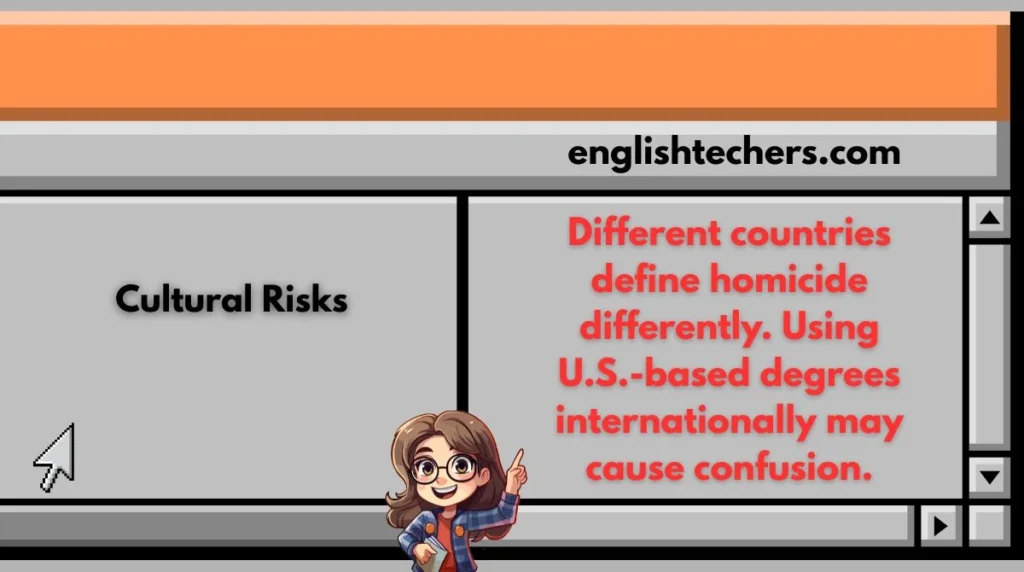
Different countries define homicide differently. Using U.S.-based degrees internationally may cause confusion.
Tone Risks
Never use it:
- As a joke
- In exaggeration
- In casual arguments
It is a serious criminal charge.
Expert Tips for Using “Second Degree Murders” Correctly
- Confirm the legal jurisdiction.
- Understand the difference from first degree.
- Avoid guessing legal classifications.
- Use official court documents for reference.
- Do not confuse with manslaughter.
- Consider the intent factor carefully.
- Be sensitive when discussing real victims.
- Avoid dramatic exaggeration.
FAQs
What is the difference between first and second degree murder?
First degree involves planning and premeditation. Second degree involves intent but no prior planning.
Is second degree murder intentional?
Yes. It usually involves intent to kill or cause serious harm.
What sentence does second degree murder carry?
It varies by location, but it often ranges from 15 years to life imprisonment.
Is second degree murder worse than manslaughter?
Yes. Manslaughter generally involves less intent or negligence rather than direct intent.
Can second degree murder be reduced?
Yes. Charges may be reduced through plea deals or lack of evidence.
Does every country use murder degrees?
No. Some countries classify homicide differently.
What is “malice aforethought”?
It is a legal term meaning intent to cause harm or death.
Can reckless behavior count as second degree murder?
In some jurisdictions, extreme recklessness showing disregard for life qualifies.
Conclusion
Second degree murders meaning refers to intentional killing without pre-planned design.
The key factor is intent, not premeditation. It sits between first degree murder and manslaughter in severity.
Understanding this term helps you follow crime news, legal debates, and courtroom discussions with clarity.
Always consider jurisdiction, intent, and planning when interpreting the charge.Use the term carefully.
It carries heavy legal and emotional weight. When discussing serious legal matters, accuracy and respect matter most.

Thomas Reed is an experienced English teacher helping students learn with simple, clear lessons.
He focuses on improving speaking, grammar, and confidence through easy daily practice.



