You might see the word “YIMBY” in a news article about housing, on social media debates, or in a discussion about cities becoming more expensive.
At first, it looks like just another internet acronym, and many people confuse it with slang or a joke. Some even think it is the opposite of “NIMBY” but are not sure how or why.
Imagine someone posting: “We need more apartments in this area, YIMBY!” If you do not know the meaning, the sentence feels unclear or political.
This guide will remove all confusion. You will learn what YIMBY means, where it comes from, how people use it in real life, and why it has become an important term in housing, politics, and online discussions.
By the end, you will clearly understand not just the definition but the real-world mindset behind it.
Quick Definition of “YIMBY”
YIMBY stands for “Yes In My Backyard.” It describes people who support new housing, development, and construction in their area, especially when it helps reduce housing shortages and costs. It is commonly used in urban planning debates as the opposite of NIMBY (“Not In My Backyard”).
Detailed Meaning Breakdown
Primary Meaning
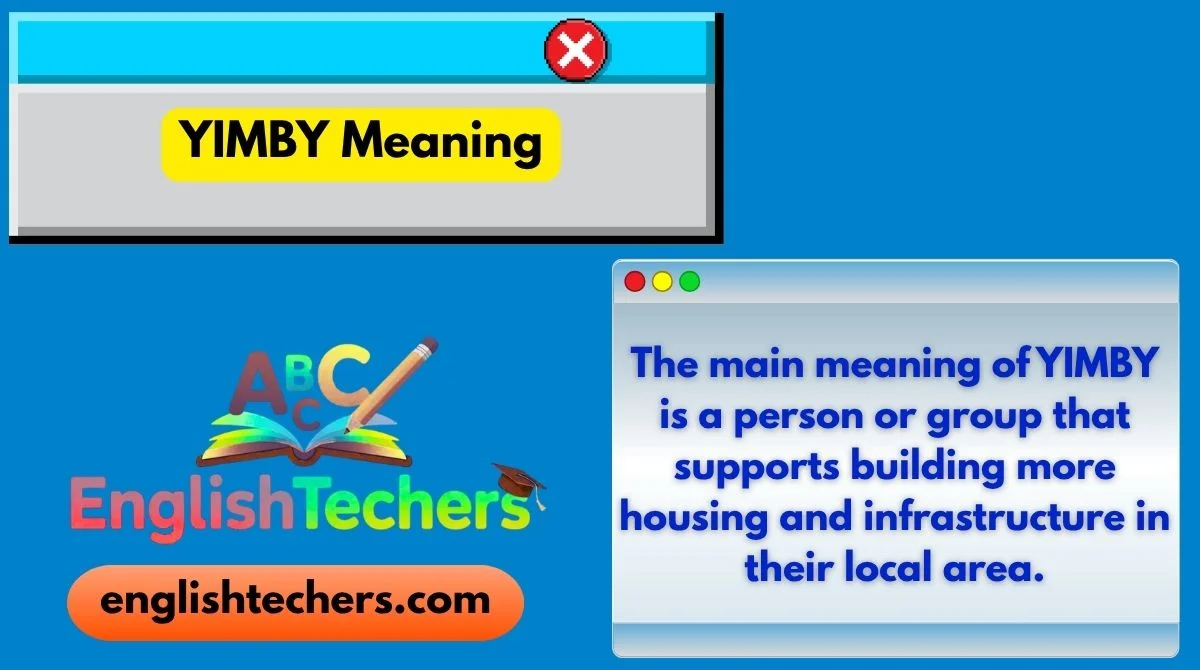
The main meaning of YIMBY is a person or group that supports building more housing and infrastructure in their local area. YIMBY supporters believe that increasing housing supply helps:
- Lower rent and home prices
- Reduce housing shortages
- Support population growth in cities
- Improve urban development
In simple terms, a YIMBY says: “Yes, build it here.”
Secondary Meaning
Over time, YIMBY has also come to represent:
- A social movement supporting housing reform
- A political stance on urban development
- A policy position favoring construction and density
Rare or Extended Meaning
In rare contexts, YIMBY can also be used humorously online to describe someone who supports almost any kind of development project, even controversial ones.
What “YIMBY” Means in Different Situations
Everyday Texting
In casual texting, YIMBY is often used as a short opinion:
- “They should build more flats here, YIMBY.”
- It shows agreement with development ideas.
Social Media Platforms
On platforms like X (Twitter), Reddit, and Facebook, YIMBY is commonly used in debates about:
- Housing shortages
- Urban expansion
- Rental prices
- Government housing policies
It often appears in heated discussions between YIMBY and NIMBY users.
Dating & Relationships
YIMBY is rarely used in dating conversations, but sometimes appears jokingly when discussing living arrangements:
- “I’m a total YIMBY when it comes to moving closer to the city.”
Professional Communication
In professional settings like urban planning, YIMBY is used more seriously:
- “The YIMBY approach supports increased housing density near transit corridors.”
Cultural or Regional Differences
- In the United States, YIMBY is strongly tied to housing policy debates.
- In other countries, similar ideas exist but may not use the same term.
- In fast-growing cities, YIMBY thinking is more common due to housing pressure.
Psychological & Tone Analysis
YIMBY is not just a word—it reflects a mindset.
Why People Use It
People use YIMBY to:
- Show support for development
- Express frustration with housing shortages
- Push for policy change
- Signal progressive urban thinking
What It Signals Socially
Using YIMBY signals that a person:
- Supports growth and development
- Is open to change in their community
- Believes in economic and housing reform
Emotional Layer
The emotional tone behind YIMBY often includes:
- Hope for affordable housing
- Frustration with high rents
- Optimism about city improvement
- Sometimes conflict with opposing views
15 Real Conversation Examples (Explained)
1.
“We need more apartments downtown, I’m fully YIMBY.”
→ The speaker supports new housing projects.
2.
“That proposal got rejected again by NIMBYs.”
→ YIMBY vs NIMBY conflict over development.
3.
“As a YIMBY, I think density is the solution.”
→ Belief in building more housing units.
4.
“Stop blocking housing projects—be a YIMBY.”
→ Encouraging others to support development.
5.
“The city needs a YIMBY policy shift.”
→ Suggesting political change.
6.
“I didn’t care before, but now I’m YIMBY.”
→ Change in opinion toward housing support.
7.
“YIMBY groups are attending the council meeting.”
→ Organized movement participation.
8.
“That’s a very YIMBY argument.”
→ Supporting development-focused reasoning.
9.
“NIMBYs are blocking affordable housing again.”
→ Opposing group mentioned.
10.
“I support transit-oriented YIMBY planning.”
→ Urban planning context.
11.
“The YIMBY movement is growing fast.”
→ Expansion of ideology.
12.
“I’m not against change, I’m YIMBY.”
→ Open attitude toward development.
13.
“This neighborhood needs YIMBY thinking.”
→ Suggesting policy change.
14.
“Both sides—YIMBY and NIMBY—argue at the meeting.”
→ Debate context.
15.
“YIMBY policies can reduce rent pressure.”
→ Economic reasoning.
When “YIMBY” Can Be Misunderstood
Context Confusion
People unfamiliar with housing debates may think YIMBY is:
- A joke word
- A random internet slang
- A typo of another phrase
Generational Gap
- Younger people online use it more
- Older generations may not recognize it
Platform Differences
- On Reddit: serious policy discussions
- On TikTok: simplified or humorous usage
- On news sites: formal urban planning term
Similar Words, Symbols, or Abbreviations
Here are 10 related terms:
- NIMBY – Not In My Backyard (opposes local development)
- BANANA – Build Absolutely Nothing Anywhere Near Anyone
- YIMBYism – The philosophy supporting housing development
- Urbanism – Study of cities and development
- Density – More housing in smaller space
- Zoning reform – Changing land-use rules
- Affordable housing – Low-cost housing options
- Smart growth – Planned urban expansion
- Housing crisis – Shortage of available homes
- Development approval – Government permission to build
When Not to Use “YIMBY”
Professional Risks
Avoid using YIMBY casually in:
- Formal legal documents
- Strict government reports (unless defined)
- Academic writing without explanation
Cultural Risks
- Some communities may see development debates as sensitive
- Can sound political or biased
Tone Risks
- May sound argumentative in neutral discussions
- Can create unnecessary conflict in casual talk
Expert Tips for Using “YIMBY” Correctly
- Use it only in housing or development contexts
- Define it once if your audience is unfamiliar
- Avoid using it in unrelated conversations
- Keep tone neutral in professional writing
- Understand local housing issues before using it
- Don’t use it to insult opposing views
- Pair it with clear explanations in formal content
- Use it carefully in debates to avoid misunderstanding
Frequently Asked Questions
What does YIMBY mean in simple words?
YIMBY means “Yes In My Backyard” and supports building more housing.
Is YIMBY the opposite of NIMBY?
Yes, YIMBY supports development, while NIMBY opposes it.
Is YIMBY a political term?
It can be political because it relates to housing policy.
Where is the term YIMBY used most?
It is common in the United States and online housing discussions.
Is YIMBY a slang word?
It started as slang but is now also used in formal urban planning.
What is the YIMBY movement?
It is a group that supports increasing housing supply and development.
Does YIMBY only refer to housing?
Mostly yes, but it can include infrastructure and city development.
Why is YIMBY important today?
Because many cities face housing shortages and rising rent costs.
Conclusion
The meaning of YIMBY (Yes In My Backyard) is simple, but its impact is large. It represents a modern way of thinking about housing, cities, and growth.
YIMBY supporters believe that building more homes and infrastructure helps solve real problems like high rent and limited space.
At the same time, the term is part of a larger debate. It is often used against “NIMBY” views, creating discussions about how cities should develop.
If you use the word YIMBY, make sure the context is clear. It works best in conversations about housing, urban planning, or development policy.
Used correctly, it is a powerful and clear way to express support for building and growth in modern cities.

Thomas Reed is an experienced English teacher helping students learn with simple, clear lessons.
He focuses on improving speaking, grammar, and confidence through easy daily practice.